-->
Showing posts with label gentrification. Show all posts

Friday, March 14, 2025

Nobody actually lives here

It's getting more difficult to hide the truth about this place.  

New Orleans and its suburbs have lost population at a faster rate than any other large metropolitan area in the country since 2020, according to new Census Bureau estimates released Thursday.

It's the second year in a row the New Orleans area has topped the list of fastest shrinking large metros.

The New Orleans area lost more than 39,000 people between 2020 and 2024, a decline off nearly 3.9%.

I suppose 2020 can be considered a turning point for many things. And it's fair to think of that as a transitional moment from a rapidly gentrifying Post-Katrina New Orleans, where the communities washed away by the flood were replaced by vacation rental amusements, to the Post-Covid ghost town where it just feels like the the wiring is being stripped out of everything. 

But, really, there is a consistent narrative flowing through both of these phases. As always, the root causes of the current hellscape trace back to what came before it. In our case, that's a long story about a city's ruling class and the deliberate choices it made in the wake of a disaster to change the city "demographically, geographically and politically," as one prominent member of the Rex Organization said at the time.  We've watched that process fairly closely over the years. The archives of this blog should show that farily well.  I have no idea if any of that mattered, though. 

In any case, the stated aim of the gentry, then, was to build a smaller, whiter, city with fewer poor people.  Congratulations to them on their success. 


Saturday, April 06, 2024

Fitting way for all of this to end

Over a decade of struggle to protect what's left of New Orleans's neighborhoods from having the life sucked out of them by Airbnb; all of the research, the planning commission studies, the overheated social media debate, the marathon city council meetings, the good times, the bad times, the shit times; is about to be brought to an abrupt end on Monday in the state legislature. 

Just as cities and parishes across Louisiana such as New Orleans, Lafayette, and St. Tammany Parish have been ramping up their enforcement of short-term rentals, HB 591 would make AirBnB immune to important oversight. Rep. Lyon’s bill, which will be heard in House Commerce Committee Monday morning, would destroy local government’s abilities to enforce city regulations, which are critical to ensure bad actors cannot continue to illegally operate short-term rentals in our neighborhoods.

Jeff Landry says he wants the city to "operate like Charleston." Charleston is one of the fastest gentrifying cities in America, thanks, in large part, to the conversion of neighborhoods into clusters of vacation rentals. 

New Orleans, as we all know, has already been bled nearly to death by the phenomenon. And, yet, every turn in the long saga has left us with some hope that we'd finally get our local electeds to listen to us even a little bit. The most recent twist found a judge (after an extended delay) finally upholding the current version of our not quite restrictive enough ordinances. But since then, nothing has happened because 1) the administration has neither the capacity nor the inclination to enforce the rules and 2) the landlords are appealing the ruling anyway. In the meantime, it's back to business as usual.  Nobody actually lives here. The rent is too damn high. And homes continue to become hotels while city leadership looks the other way.  

And now comes Marrero Democrat Rodney Lyons with the Deus Ex Machina, a bill that finally takes the entire question off of the desk of anyone in local government.  You can bet that they're all hoping Lyons's bill passes for that reason alone. It makes their lives a lot easier if all they have to do is say they feel bad that you got evicted and no one expects them to do anything about it anymore.

Friday, March 15, 2024

Nobody actually lives here

It's pretty amazing that we're going to live with a persistent narrative of post-Katrina New Orleans (the 2010s especially) as some kind of a boom period. In reality it was a straightforward process of gentrification and ethnic cleansing. The population took a big hit with in 2005 and never recovered. The next 20 years were a time of wealth consolidation. What were once neighborhoods were scooped up by asset speculators. Schools and family services were sold off. It wasn't just raw population numbers that got smaller, the scope of community, the social sphere itself shrunk. It was a truly awful time. But for some reason, it was accompanied by a media driven fantasy about a "new New Orleans" attracting scores of young hip people.

Anyway, it's all still happening. Only now we get to read about it minus the pretense

And the New Orleans-Metairie metro area saw the steepest loss among large metros nationwide, with its population declining by 4.3%. The metro area had traditionally been able to count on fast-growing St. Tammany Parish to improve its standing, but that ended in 2020 when the suburban parish was made into its own metro area.

Even if the population growth St. Tammany saw since 2020 were added into the New Orleans-Metairie total, the metro area would still have seen the third steepest loss across U.S. metros.

Wednesday, May 11, 2022

Aggressive

Out of state investment firm becomes absentee landlord to local apartment building.  You won't believe what happens next

Passco Companies, of Irvine, California, said it bought the 330-unit complex and its 500-space parking lot — which is now known as Canal 1535 — primarily because of its proximity to the burgeoning biomedical district in that part of the city.

"We found it to be a great market for job growth and migration with all the education and healthcare employers moving in," said Stacy Stemens, a senior vice president at Passco. "That's who's renting there and the rents are aggressive."

Units in the nine-story building average just over 900 square feet and rents have shot up amid a nationwide shortage of rental properties.

Stemens said that as leases turn over, rents that were about $1,500 to $3,500 a month are now averaging between $2,500 and $5,500 for the one- and two-bedroom units. In the New Orleans area, rents have increased by 8% in the six months ending in April, contributing to what fair-housing advocates say is an escalating affordable-housing crisis.

Monday, June 21, 2021

Faubourg Stacy

Some of you kids are old enough to remember those bumper stickers.  They went a long way to communicating the post-Katrina aspirations of a certain segment of Uptown White voters without explicitly stating those aspirations. Of course Stacy was pretty explicit about it when she wanted to be

Anyway, here we are after a decade or so, a public housing demolition, hundreds of Airbnbs, and several blown kisses later, and the vision is really starting to fall into place

With qualifying for New Orleans’ municipal elections about a month away, politicos are eyeing the party, gender and ethnic make-up of the city’s voters overall and in the individual City Council districts.

A new analysis by seasoned demographer and consultant Greg Rigamer shows that there are currently 273,627 registered voters in Orleans Parish residing in 216,052 households. This includes 119,656 (43.7%) male voters and 153,681 (56.2%) female voters.

Of that total, 149,373 (54.6%) are Black; 99,821 (36.5%) are White; and 24,433 (8.9%) are registered as “other.” Democrats make up 64.2% (175,571) of the voters; “other party” 25.9% (70,748); and Republicans 10% (27,303).

Council District A has the highest percentage of White voters, and Council District E has the highest percentage of Black voters. For the first time in recent years, the percentage of White voters in Council District B exceeds the percentage of Black voters

Thursday, April 01, 2021

And there is the catch

Sorry to say this but the only reason anyone with any power can even imagine taking the Claiborne Expressway down now is the same reason it was erected in the first place. It is because we have reached a point in the cycle where tearing it down can and will benefit wealth.  This is going to be the same point I made ten years ago when the gentrification taking place in Treme first set the planners' sights on gussying up the convenient real estate they had buried under that bridge decades before.  But taking down the expressway, in and of itself is not going to magically restore the neighborhood that was broken apart by its construction. 

The 20th Century was a long time ago.  Other things are happening now and they are not great things for poor and working class people in cities. The political game now is all about moving those people out of the way, isolating them in far flung suburbs, and even taxing them if they try to drive back.  The cities (and especially this city) aren't for poor people anymore. Instead they (especially this one) are playgrounds for rich people and tourists where nobody actually lives. All of the planning and policy decisions made now are intentionally meant to facilitate this.  

For years the Claiborne overpass was a public health and "quality of life" detriment to poor people living near it. Nobody who could do anything about that cared.  But now it is in the way of real estate development so it's apparently time to take that problem seriously. 

Anyway, the Washington Post got in touch with Amy Stelly to for its story on the infrastructure bill that might fund the highway's removal. She's obviously very much aware of the problem.

While activists’ goal, in many cases, is to remove a highway, they say they also want communities most harmed by their construction to enjoy the benefits as their neighborhoods become more desirable. That could mean help for renters to buy their homes or property tax advantages.

We can’t remove highways in neighborhoods that would otherwise have been very desirable and leave it to the real estate market to govern,” Stelly said. “The people of Tremé should have the right to return when it’s beautiful.”

And, well, that's the catch, isn't it. 


Tuesday, November 26, 2019

We need to kill the term "culture bearer"

I cringe every time I see it used. A "culture bearer" is not some separate class of person.  We're all culture bearers. All of us here participating in society together, whether we like it or not, are creating a culture together. Right now it's not a particularly healthy culture. In part this is because of our failure to understand what is happening and to whom. What's happening in Treme is a crime. But it's not just something happening to "culture bearers." It's happening to all of us.
Like the second lines that pass through the neighborhood, those who used to call Tremé home say the culture has become transient. Leaving it with no sense of community.

“All the juice, or the oxygen rather, has been sucked out of the room,” says Al Jackson, owner of the Tremé Petit Jazz Museum. “The culture, oxygen, the children, the raison d’etre that we once woke up in the morning and lived for. It’s gone.”

Jazz Vocalist John Boutté says the community was effervescent. You could hear kids playing and laughing, you’d see people talking on the steps and everyone said hello.
Today, Boutté believes he’ll never see that part of Tremé again.

“The folks aren’t there anymore and unless you bring those people back, you’ll never have that part of Tremé again,” Boutté said.
What's happened to Treme is a crime of capitalism. It is the same crime that is happening to every neighborhood to some degree. It is the same crime that is happening to most cities.  Land is hoarded by real estate speculators. Housing prices and rents are artificially inflated. Wages and benefits are stagnant for most working class people so they can no longer keep up with the escalating cost of living. People take on second jobs or part time jobs or jobs where schedules are unpredictable so their time for leisure (or "creative labor" if you prefer the more commodified term) is limited. 

Meanwhile, the aforesaid real estate speculation encourages the city to crack down on institutions and mores that might disrupt profits such as substandard lawn maintenance, corner bars, and outdoor musical performance. So not only is time for creative leisure reduced but so are the physical spaces where it formerly flourished are also taken away. Those that remain are under increasingly intrusive police surveillance which further intrudes on our social space to think and act creatively.  These are sinister processes meant to commodify basic human freedom.  Everyone has the right to be creative. Everyone has the right to spend their leisure time appreciating or conversing with, the fruits of that creativity. It is our collective creative leisure, the act of creating but also just enjoying what others create that generates authentic "creative culture." 

Despite what the oligarchs who control the extractive tourism economy would have us believe, that isn't something they can put that in a bottle and sell in a shop. They can't manufacture it at New Orleans & Co. no matter how much public money the city dumps into their hands. "Culture bearer" is a term they encourage, though, because it conjures a specific product they're already primed to profit from. It isolates a bland branded and frozen version of New Orleans Culture and limits it to something they can control.

We all bear the culture. It is ours to share, to replicate, to elaborate on, and, most crucially, to evolve. But we can't do that when the marketers, hoteliers, land speculators and the homeowners association product who is currently our mayor conspire to steal what we've already created and deny our right to continue as before.  That's what's happened to Treme. And it's going to keep happening until we recognize that a threat against a "culture bearer" is a threat against us all.  A good way to start is to dispense with using that term at all anymore. 

Wednesday, October 30, 2019

What always happens

In today's nothing-ever-gets-better story, we begin with a lawsuit filed by New Orleans short term rental operators which contends that, even though the city's latest set of regulations gives them almost everything they could want, that still is not enough. These landlords have the resources to keep pushing back until they get their way.  They'll get it eventually.
The suit argues that by preventing owners who formerly held temporary licenses from continuing to operate short-term rentals, the city is violating their rights.

“We were granted a license and had a fair and reasonable expectation that we were going to be able to renew our licenses, as long as we followed the rules,” said Eric Bay, president of the Alliance for Neighborhood Prosperity.

The city did not respond to a request for comment on the suit.

When the council changes the rules on what a property can be used for, existing businesses are typically allowed to stay in operation as “non-conforming uses” as long as they do not close for more than six months.

In discussions leading up to the passage of the new rules, however, city officials said that policy would not apply to temporary rentals since they did not count as full-time uses, a requirement to be granted nonconforming status.
Not being a law talking guy, I can't say what ANP's chances are of winning in court. It sounds to me like a bad argument but you never know, with the right judge...
The case was originally assigned to Civil District Judge Robin Giarrusso, who recused herself because her son is Councilman Joe Giarrusso. It was reassigned to Judge Nakisha Ervin-Knott.
In any case, all they really have to do is keep making the argument over and over.  Their organization has enough money and influence that eventually the right councilperson will take them seriously and they win. Because that's what always happens.

In a way, the damage has already been done. Several years of STR proliferation has supercharged the already out of control speculative real estate market in New Orleans exacerbating the housing crisis. This is reflected in the sticker shock experienced by homeowners all over the city after this year's quadrennial property reassessments. HousingNOLA's Andreanecia Morris writes in this Lens op-ed about the impact of those assessments on renters, who will have the cost of tax increases passed on to them, as well as the city's most vulnerable homeowners.
One of the challenges in dealing with the affordable housing crisis is the fact that some people don’t understand that it affects everyone. The biases many people have lets them (namely middle-class homeowners) believe that they are immune. Those who own their homes are not exempt from the impacts of our city’s affordable housing crisis. HousingNOLA’s data driven process has addressed tax issues from year one. Gentrification of historic neighborhoods and increased market pressure across the city have driven increased property values every year since Hurricane Katrina. Only seven out of 72 neighborhoods include census tracts which did not see an increase in housing values between 2013 and 2017. The median home value in New Orleans has increased by twenty-five percent since 2014, according to MLS data. There is ample data to demonstrate how vulnerable Orleans Parish homeowners are to any significant changes in their tax rates:
  • Forty-one percent of homeowners are cost burdened—with nearly a third of owner-occupied households earning an annual income that is below the median income;
  • Forty-four percent of owners have paid off their mortgage or inherited their home;
  • A third of homeowners are over the age of sixty-five. Eleven percent of all homeowners in Orleans are cost burdened senior citizens.
Unfortunately, the mayor doesn't seem to have much sympathy for housing stressed residents She's also asking voters to approve a whole new 3 mils on this fall's ballot. On top of that, she appeared at a city council budget hearing this week to urge the council to "roll forward" its millage in order to capture the maximum revenue windfall from the higher assessments. She has been talked down to asking for a 50 percent roll forward in recent weeks despite having predicted "dire consequences" for not taking the full amount.  Councilmembers were not very receptive.
Council members have argued that while the city needs more funding, residents are being squeezed out of the city by higher costs of living. They argue that higher property taxes would not only be a risk to lower income homeowners, it would also be a burden to renters because  landlords are likely to pass those costs on to their tenants.

“The message we’re receiving is the city is increasingly unaffordable to live in,” Palmer said.

She again stressed that there could be other sources of revenue the city is leaving on the table. She brought up the amount of money the city could be losing because of homestead-exemption fraud and suggested hiring more sales tax collectors to make sure the city was getting everything it was owed.

In recent months, the council has also discussed cracking down on exemptions for nonprofits and manufacturers that get state tax exemptions. The council also recently created a task force to look into the possibility of creating a parcel fee for property owners.
Yeah, hey, speaking of nonprofit exemptions, here is a pretty big one in the news this week.
There have been multiple efforts to redevelop Charity since the state opted to close it in favor of building the new University Medical Center on the other side of Interstate 10.

The most recent attempt has been underway for more than 2½ years and has largely been led by the Real Estate and Facilities Foundation. That process resulted in officials last year picking 1532 Tulane Partners, a joint venture between the New Orleans-based CCNO and the Israeli company El Ad, to undertake the huge project.

The company said it has been doing due diligence on the property and refining its plans since then.

The redevelopment is expected to cost about $300 million, which will be partially funded with a variety of tax credits. Because LSU will retain ownership of the property, it will be exempt from property taxes.

The lease calls for 1532 Tulane Partners to pay LSU $11.85 million up front and yearly payments for the duration of the 99-year lease. The payments will start at $250,000 a year and increase by 10% every 10 years, eventually totaling about $39 million.

The money from the lease will be divided between the Real Estate and Facilities Foundation and the university itself.
So 1532 Tulane Partners pays LSU to lease the building, takes advantage of various public subsidies and tax credits to renovate it, and none of the money ever gets back to the city. We must be getting something nice in return for that, right?  What are they putting there anyway?
The former hospital building will include about 390 residential units plus retail shops and restaurants.

Tulane University will serve as the anchor tenant in the complex, renting a significant amount of space in the building for student housing and offices, Maurin said.

Plans for the project also include renting about 150 residential units to Sonder, a short-term rental company that already has significant operations in New Orleans. That would be about 50% more units than would be allowed for the property under short-term rental rules the City Council passed earlier this year, which bar renting more than 25% of the units in commercial buildings to tourists.

While the development plans do not need any city approvals because it is state property, the project will have to comply with the city's short-term rental rules, Maurin said. 
That's confusing. How is it they are already breaking the rules they say will have to comply with?  It doesn't say here. Maybe they're planning to be pre-grandfathered in.  Whatever it is, I'm sure they'll get whatever they want while the costs of maintaining the city government continue to fall on those who can least afford to pay. Because that's what always happens.

Thursday, May 23, 2019

It shouldn't be this hard

Given the amount of yelling and screaming that had to be overcome to permit this development in Bywater, it really should have been worth more than this.
The planned development process also limits the number of units the developer, the Texas-based ITEX Group, can build. The company and the Housing Authority of New Orleans, which owns the land on Royal Street, were seeking mixed-use zoning, which would have allowed up to 189 residential units. The underlying zoning approved Thursday would cap units at 146.

The proposal before the council calls for 136 units. HANO and ITEX have said they would subsidize 90 affordable apartments by offering 46 market-rate units.
That's barely even the beginning of a dent in the affordable housing shortage.  And the only way to finance it is by allowing the developer to sell 46 "market-rate" (likely high end) apartments. Yes, it builds some affordable housing. But we shouldn't be required to build nice things for rich people just to be able to do that.

And still the yuppies in the heavily gentrified neighborhood showed up to bitch and moan.  Unfortunately this is the "only game in town."
Another project supporter, affordable housing advocate Breonne DeDecker, said the council should consider that resources for affordable housing is extremely scarce.

This is the only game we have in town. We will not get this fixed until there’s a huge lift at the federal level," DeDecker, program manager at the Jane Place Neighborhood Sustainability Initiative, said.
But the only game is still rigged. 

Thursday, May 16, 2019

In the endgame now?

At City Hall this morning they're getting set for what is likely the penultimate council hearing on short term rental regulations.  At least for this phase. The franchise can always be rebooted and probably will. There will be plenty of loose ends to pick up on;  lawsuits, enforcement issues, spot-zoning creep, it's all baked into the set of rules currently on the table.

The current chapter has been a long time in development. To get a sense of it,  I tried to find the earliest mention of Airbnb on the Yellow Blog.  That's not a perfect barometer, especially now that I've gotten so lax about my note taking. I've been writing about gentrification on this blog since before Katrina.  Anyway, here's a post from 2013 that mentions Airbnb in San Francisco. But that was really just a link to a story about the "sharing economy" in general.  The oldest post here about New Orleans that I specifically tagged "Airbnb" was this one from 2014

The point is, it's been a long time coming to get us to this point where our electeds might start taking substantive action to rein the problem in.  Kristin Palmer is pleased with the work "some of" them have done.
”I’ve been pleased with the attention to the different aspects of short-term rentals and how engaged some of the council members have been,” said Councilwoman Kristin Gisleson Palmer, who has led the charge on the issue since taking office last year. “A lot of the stuff that’s coming out now is actually more restrictive than what we originally envisioned.”
And, as we said at the top, this isn't quite the last episode.  Today is about revising and approving the Planning Commission's recommendations. They still have to come back in a few months to pass an ordinance.  A copy of today's proposed amendments is attached to this NOLA.com article. Mostly these deal with tweaks to what is and isn't allowed in residential zones and whether or not those rules can be overridden by city council through conditional use permission.  It looks like they're leaving the question of affordable housing set asides in larger commercial developments for later.

Further complicating matters is Jimmy Harris's HB 43, up for consideration in a State Senate committee today, coincidentally.  This is the part of the tourism Grand Bargain that imposes a new 6.75% sales tax on STRs in New Orleans and gives a portion of the revenue to Sewerage and Water Board. Why not all?  A quarter of it goes to New Orleans and Co. for some reason. It's an indication of what a rotten deal LaToya has struck with the tourism cabal. But that's a subject for another post.  The problematic nature of tying vital infrastructure funding to the success of an industry that displaces residents should be obvious. The pro-STR lobby is already trying to exploit that, in fact. According to Palmer, that isn't going to fly. But time will tell.
The architect of the proposed regulations, Councilwoman Kristin Gisleson Palmer, was critical of the letter, describing it as a “weak attempt to try to split the (Cantrell) administration and the council and make STRs a wedge." But she acknowledged the legislation is going to cause issues with raising more money for affordable housing.

The mayor, meanwhile, remains curiously on the sideline. As a councilperson her record on this issue has been neutral-to-not very good.  At some point she's going to have to weigh in. 

In the meantime, stage lights are going up at City Council. Enjoy the show today.

Wednesday, February 20, 2019

Cost/benefit

I don't know how accurate this is but here is a sort of progress report for HANO's plan to "replace" the affordable housing units lost in the public housing demolitions. Of course given the decade of displaced families, scattered communities and other hardships amid skyrocketing housing cost, there's a lot that gets left out in that equation. 
HANO has in recent years worked with private partners to build what are known as "mixed-income" developments — developments that include both subsidized and market-rate apartments — as replacements for its former housing complexes, which had become centers for poverty and often crime. The effort is aimed at alleviating the ills associated with concentrated poverty and giving low-income residents more modern homes to call their own. 

The former B.W. Cooper (originally Calliope), St. Bernard, Lafitte and C.J. Peete (originally Magnolia) complexes were rebranded as Marrero Commons, Columbia Parc, Faubourg Lafitte and Harmony Oaks — mixed-income neighborhoods with far fewer units for the very poor than the former public housing complexes.

Iberville became Bienville Basin in an on-site redevelopment that has been handled by HRI, another local developer. McCormack Baron, the firm behind Harmony Oaks and Marrero Commons, is handling the off-site component of the vast Iberville replacement project and has been working to pepper low-income units throughout the surrounding Treme neighborhood.

Of the 821 former Iberville units, HANO and its partners have fully replaced 579, have another 102 under construction and have yet to break ground on 50, officials said. That will leave 90 still to go.
This particular story says we're supposed to see 30 more added to that total via a planned redevelopment of the abandoned St. Louis Street Winn Dixie. The scheme here, as usual, is to accomplish this by handing out a package of tax credits, grant subsidies, and a 25 year PILOT agreement to the developer who will also get to build another 46 apartments for sale at "market rate."

Anyway, since HANO is apparently keeping track of the number of units it has "replaced" since blowing up the Big Four, I'm curious to know if there exists a full accounting of how much all of this has cost in terms of tax credits and other incentives paid out to developers.  For extra credit you can factor in their profit from the luxury rate housing they've built on the prime real estate they've been granted in the process.

If we're agreed with the Advocate here that, "alleviating the ills associated with concentrated poverty," and not just handing sums of cash to wealthy developers is really the goal of this project, we should also look at whether or not the costs justify the supposed benefits of that.

How is that whole de-concnetrating poverty thing going, by the way? Well, according to the Center for Budget and Policy Priorities..

Few Metropolitan Families Using Vouchers Live in Low-Poverty Neighborhoods, Despite the Presence of Affordable Units

Just 14 percent of all metropolitan voucher-assisted families with children — 123,000 households — live in low-poverty neighborhoods. The share varies considerably by location, ranging from 4 percent in the New Orleans metro area to 45 percent in the Washington, D.C. metro area (see Figure 1).
Not great, then. Not really de-concentrating poverty. From the looks of things, we are re-concentrating it on lower ground and further away from the city center. Here it is on the map. Click to embiggen.

Thursday, January 10, 2019

Being poor is very expensive

During his time overseeing the annual city budget process, Mitch Landrieu used to talk about the drying up of state and federal aid to cities by telling us "the cavalry was no longer coming" from Baton Rouge and Washington. Because we've spent several decades now dismantling federal policies intended to help cities house, feed, and educate and care for their populations, our cities have undergone a bloody cycle of deterioration, privatization, and, finally, reclamation as places that only the wealthy can afford to live comfortably.  Of course, Mitch's policy response was mainly focused on conforming to rather than resisting these circumstances but at least he understood the problem.

Not that that was ever much help to the non-wealthy people of New Orleans who, over the course of what we euphemistically refer to as this city's "recovery" from the Katrina disaster, faced the hardships of diminished services, increased cost of living, the privatization of their schools, and the selling off of their neighborhoods to predatory investors.  All the while this was going on, Mitch continually warned of a time when even the federal disaster aid would run out and the city would be on the hook to cover the costs of repairing and maintaining its vital infrastructure.

The main part of Mitch's strategy for dealing with this was to do everything he could to encourage the rapid gentrification of New Orleans. Never mind that this necessarily meant the city would have to become a glorified resort where nobody actually lives. Anything to keep inflating those property values, and hopefully, the potential tax revenue along with them. Outside of this, the strategy in New Orleans has been little different from what cities all over the country have done to fill their growing budget gaps.  Namely, they've gotten more and more aggressive about shaking down the poor
In areas hit by recession or falling tax revenue, fines and fees help pay the bills. (The costs of housing and feeding inmates can be subsidized by the state.) As the Fines and Fees Justice Center, an advocacy organization based in New York, has documented, financial penalties on the poor are now a leading source of revenue for municipalities around the country. In Alabama, for example, the Southern Poverty Law Center took up the case of a woman who was jailed for missing a court date related to an unpaid utility bill. In Oregon, courts have issued hefty fines to the parents of truant schoolchildren. Many counties around the country engage in civil forfeiture, the seizure of vehicles and cash from people suspected (but not necessarily proven in court) of having broken the law. In Louisiana, pretrial diversion laws empower the police to offer traffic offenders a choice: Pay up quickly, and the ticket won’t go on your record; fight the ticket in court, and you’ll face additional fees.
As that Times article shows us, poor people in cities all over the country can be sucked into a suffocating spiral of imprisonment and legal fees by something as simple as an expired brake tag. But perhaps the tide is turning. 

Late last year, a federal judge ruled that Orleans Criminal Court's fee structure was tantamount to the operation of an unconstitutional "debtor's prison." Presumably steps are being taken to rectify this. But a lasting solution has not yet become evident. Mayor Cantrell ran on a promise to take down the city's hated traffic cameras which she herself criticized for "nickel and diming" the citizenry. But, as we've seen, she's really only partially lived up to that promise. Basically the money still has to come from somewhere. And while we appear to be getting better at recognizing it shouldn't come from those least able to pay, we've only just begun to where it probably ought to come from instead. And that is still going to be a fight.

Friday, December 21, 2018

We love our cameras

Cyndi Nguyen and Kristin Palmer are bringing last year's narrowly scuttled mass surveillance ordinance back to life.
Less than a year after a similar measure was dropped, a proposal from members of the New Orleans City Council could require "nuisance" bars, clubs and liquor stores to install live-streaming video cameras inside and outside their businesses, part of a proposed ordinance that tightens restrictions for businesses that sell alcohol.

The proposed ordinance — which mirrors parts of a scrapped plan from former Mayor Mitch Landrieu — also gives the mayor’s office or New Orleans police superintendent the ability to revoke or suspend an alcohol license, if the city or its Alcoholic Beverage Control Board determines that the business “directly endangers the health, safety and welfare of the community.”
I still don't understand the universal enthusiasm for sticking cameras everywhere. Particularly since it obtains among a set of elected leaders who profess often to care very much about social justice. It's possible they all suffer an acute case of cognitive dissonance. Although Occam's razor, as always, suggests they're just full of shit.

More to the point, they're predisposed to be full of shit on account of the fact that so many of them have a personal interest in or close association with the real estate business. Which is why, for one thing, this ordinance is being carried by Palmer and Nguyen. More importantly it is why its major point of the ordinance isn't just about installing cameras. Rather the cameras are one piece of a plan that is really more about shutting down as many neighborhood bars as possible. 

Bars and music venues also can’t be built within 300 feet of a playground, church, public library or school — unless the owner has a sworn affidavit from 75 percent of property owners within a 300 foot radius.

They’d also be forbidden within “residential or park area,” and would grandfather in existing neighborhood bars, unless there’s a six month lapse in their permits and licenses.

MaCCNO also warned that real estate speculators and developers, including short-term rental operators with multiple listings, which proliferated in recent years, could abuse the complaint process to shut down area bars.

“This is an aggressively pro-gentrification ordinance and presents a clear and present danger to every small grocery, pharmacy, bar and music venue in the city,” MaCCNO said.
This ordinance is slated for committee discussion  on January 31. Between that and the Jan 10 motion on STRs, it's going to be a busy month.


Monday, August 06, 2018

Why your city sucks

Football season is fast approaching and Magary is on the Jets today. Not every city in America is New York. But New York's problems are basically urban America's problems amplified to Nth degree.  For example, see if you recognize a little bit of your city in this.
Nothing works. The only people left are billionaire dipshits and angry men in construction helmets. All the new real estate in town consists of 71-story luxury condo towers with one apartment per floor, each occupied for three weeks a year by the hideous nephew of some Uzbek cobalt magnate. New York City, itself, has become the Jets of cities: an expensive, boring wreck.
What a time to be alive. 

Monday, May 14, 2018

Density bonus

So much energy gets spent arguing over whether or not the city is even allowed to do bank-shot trickle down style housing policies like inclusionary zoning or voluntary density bonuses that we miss out on the fact that these are largely just sops to developers who benefit from slapping an "affordability" label onto what are really luxury developments.

In some cases, the developer doesn't even have to participate in the density bonus in order to at least associate it with their branding effort.  All that really matters is that they get to say, we tried.
The building will still be mixed-income, though there are some changes in what that mix will look like. The original plan set aside 15 percent of the apartments for lower-income residents for 50 years, with some units priced at rates targeting residents who earned as low as 30 percent of the area's median income.

In the updated plans, 10 percent of the apartments -- or seven units -- will be priced to target residents who earn 80 percent of the area's median income. That translates to about $900 a month for a one-bedroom unit and $1,100 a month for a two-bedroom unit.

Doucette said the remainder of the apartments will have rents at "workforce levels," geared toward people who work in Bywater or commute to jobs in the nearby downtown area. Rents would fall between $1,400 and $1,600 a month for a one-bedroom unit, and between $1,900 and $2,200 for a two-bedroom unit.
Even the lower end of that "mix" is too damn high. The median income in New Orleans is roughly $36,000.  The seven(!) units in the less expensive range really stretch the notion of what would qualify as affordable there. But it's really that "workforce" terminology that ought to insult people. It suggests to us that, if we aren't able to meet a $1,400 - $2,200 rent, then we aren't the sort of "workforce" that is valued here.  I don't know who commutes downtown for that kind of money.  Maybe they're oil and gas executives.  (Oh wait. No.)  Maybe they're at the University Medical Center. (Oh no.)  In any case, they certainly aren't part of that "backbone of New Orleans" cultural/service economy we like to celebrate.  I suppose you could pull down that kind of rent letting those units out as STRs, but that's not why we build multi-unit housing in tourist-friendly neighborhoods, right.?

Anyway, the good news is the Cantrell Administration should be able to glean some helpful insights into these challenges from the developers themselves.  One of them is LaToya's new deputy CAO.

Sunday, May 06, 2018

Resilience accomplished?

Today is Mitch Landrieu's last day as mayor.  I have no idea how he's decided to spend it.  There's a big Pelicans game this afternoon. It's also the last day of Jazzfest.  Of course there's always at least a 30 percent chance he might be in Aspen anyway.  If you happen to run into him, see if he will sign your yearbook.

By now the local news outlets have published their big obligatory retrospectives. WWLTV filmed a soft-focus chat with Mitch and Eric Paulsen framed in front of a fireplace in Gallier Hall. Gambit sat down for an "exit interview." NOLA.com took a very NOLA.com approach and asked its readers/commenters to "grade" the mayor's performance.  The Advocate took a thorough look back focusing on "key indicators" having to do with crime, housing, "the economy," and the city budget.

To paraphrase George Bush, being mayor is hard work. Okay, not really.  You mostly just go around taking pictures with Mardi Gras Indians at Costco openings and whatnot. But it is a job where you are held accountable for a lot of things. Some of those things you even have a degree of control over. But not necessarily in the way the public perceives that you do. There are conditions a mayor is subject to that are beyond his control. A mayor's "grade" depends less on the change in such conditions than it does on what sorts of values are reflected in his policy responses.  

It's unfair, for example, to blame the mayor for the crime rate. But we can ask who benefited from Mitch's crime policies. Signing on to the NOPD consent decree was the right move for Mitch. (We can argue he didn't have much choice there but at least he didn't put up a fight over it.) Other decisions; installing surveillance cameras everywhere, allowing Sidney Torres to launch his app patrol or whatever, working with shady contractors like Trident Services and Palantir; were less good. Crime was bad in New Orleans when Mitch took office. It is still bad as he leaves. If the bulk of his choices under those conditions leave us with a more intrusive and unaccountable police state, are we better or worse off?

Mitch happened to be mayor when there was a lot of federal money available to do a lot of big capital projects. He'll be remembered for the new airport, the new hospital, the streets he really did fix, the stuff he spent FEMA money on. But should he be credited for those things?

At least he didn't entirely screw them up. He clearly handled the nuts and bolts of it better than Nagin had been doing at the end of his term. But I would wager that much of it was going to get done one way or another. It's what happens when a city is supported by a big pipeline of federal money dedicated to infrastructure. In fact, there should always be such a pipeline in the "richest nation on Earth" and it is our continuing shame that it takes a catastrophic event in order to free resources that should be readily available in every city all the time.

As I've said many times, though, it was Mitch's job to ensure that the process of rebuilding "the city we always wanted to be" benefited those who most needed the help rather than those best positioned to take advantage of it. And on this count, not only is Mitch an unmitigated failure, he can be counted as a malevolent actor. Of all the words in the long Advocate retrospective, these are the most relevant.
In a poor city, the median household income hasn’t registered any measurable increase during Landrieu’s tenure, and black households have actually seen a decline. More than half of local renters are spending at least 30 percent of their income on housing, and some residents complain that ineffectual city policies and enforcement against the rampant use of sites like Airbnb have turned their neighborhoods into virtual tourist districts, with few places for permanent residents.
Of course it can always get worse. I've got a feeling we're about to find out how much worse. But that's a subject for another post.

Saturday, April 21, 2018

Growing pains

This is what a housing crisis looks like to people who no longer have to worry about housing.
“I’m very aware of the growing pains of Bywater,” Ramsey said. “[But] Bywater historically is a mixed-use neighborhood. ... It hasn’t ever been a quiet sleepy suburb.”

Though she said she’s “not completely enamored with idea of a hotel there” and can “certainly understand some of the complaints,” Ramsey said the provisos would better fit the project into the Master Plan and address residents’ concerns. But the more than 40 people at the meeting who opposed the project grew frustrated with Ramsey’s description of opponents — Ramsey challenged that residents concerned about gentrification and displacement have only “recently moved in themselves” and called residents’ advocacy against the project “disinformation campaigns by people with ulterior motives.”
Nadine has spent a career in politics taking money from developers and real estate vampires but wants to tell us something about "ulterior motives." Anyway, there are several disinformation misdirects going on here. All of it comes from Nadine.

Nadine purposefully ignores the role of class in the way she defines gentrification.  She complains about the supposed hypocrisy of "recent arrivals" while completely missing the point. Recent arrivals don't forcibly displace people. Money does that.  Pointing out that there are recent arrivals on both sides of the Sun Yard fight tells us nothing.  Looking at who those recent arrivals are tells us everything.  The hotel developers are in the real estate business, except in a carefully branded small business, organic, family, whatever.. way.
Solms, 36, and Pignataro, 38, co-own a small family business focused on historic preservation, including renovating several apartment buildings in Philadelphia.

She envisions the local property as "just a small boutique hotel" — a nice place to stay, swim and relax, "nothing exclusionary, high-end, just very friendly and fun."

Solms also has spent more than a decade operating an organic agriculture business in Jamaica. Pignataro has a background in real estate.
There are recent arrivals among the opponents as well. But one of these situations is not like the other. Can you spot the difference?
My partner and I are former tenants of 3030 St. Claude and were displaced from our home to make way for this development.

We are low-income working people. Our home on St. Claude was affordable and convenient, in a wonderful community with great neighbors. When the developers refused to renew our lease, Morgan noted that this was the second time in two years that he had been displaced from the area to make way for upscale development. (The earlier eviction was from his apartment on North Rampart near Spain Street. Morgan’s landlord had decided to empty and renovate the building, then cash out for a hefty profit.)
If the housing remains available and affordable, then people can afford to live there. If it is converted to condos and hotels and STR pseudo-hotels, then they can't. This doesn't necessarily have to do with where the individuals involved come from. It is true that a lot of the money that causes displacement of poorer locals and transplants alike comes from out-of-town land speculators and the tourism industry. But that is a level of analysis Ramsey refuses to apply. In her mind, it's all just a natural process of "growing pains."  Which is an easy thing to discount when you aren't the party who is actually feeling the pain.

Ramsey also raises the specter of "NIMBYism" among the Sun Yard's opponents. I think that "growing pains" comment was actually meant to rebuff the quality-of-life type complaints from neighbors like noise and whatnot. She might have a point if that were the sole objection. Noise is a contentious issue all over town. Often we find noise complaints used as another tool of gentrification, in fact, as wealthier "recent arrivals" lobby to shut down corner bars and music venues.  But not all noise complaints serve the same purpose. As always, the relevant question is for whom, against whom, and we have a tendency to ignore that question when it suits.

I have a pretty high tolerance for noise. Which is why I don't want to live in a "quiet sleepy suburb" either. I like being around people. I live in a neighborhood where a lot of stuff happens. It gets pretty intense there during Mardi Gras. A few second lines pass by my door every year. Those are the big ones. There's also a lot of little stuff.  I'm a block off a major thoroughfare so there is lots of vehicular and foot traffic.  There are a couple of neighborhood bars in walking distance.  I'm caddy corner to a laundromat that sometimes hosts extracurricular activities. Yesterday, for example, there was a "4/20" party there featuring a few hours with a live band.  None of that stuff bothers me. It's the general noise of the neighborhood being itself.   The loud late night parties on the balcony at the short term rental across the street, though, make a more hostile sound. It carries the threat of being kicked out of my apartment one day.

I'm no "recent arrival."  I was born and raised in New Orleans. I've lived in my current location for almost 19 years.  My presence there hasn't displaced anybody.  Similarly, the recent arrival service industry workers and immigrant families who live in my building aren't displacing me.  But, as more and more of the property in the surrounding blocks is flipped from affordable housing over to condos and vacation rentals, it's that money that is threatening to displace all of us.

Nadine says this is all just growing pains, though. She has one more council meeting to go before her tenure is up. 
Following some debate after initially requesting a vote in favor of the project during the Council’s April 19 meeting, District C Councilmember Nadine Ramsey — whose district encompasses Bywater — pushed to defer voting on the plan until May 3, the last meeting of the current City Council before the administration’s inauguration on May 7. (It’ll be one of Ramsey’s last votes in office — voters elected former District C Councilmember Kristin Gisleson Palmer to replace Ramsey in 2017 elections.)
It's entirely possible that the next council takes the same attitude that Ramsey has.  But let's worry about those recent arrivals after they've already moved in.

Thursday, April 05, 2018

We did this on purpose

Gentrification is a deliberate policy choice.
In “Rigging the Real Estate Market: Segregation, Inequality and Disaster Risk,” a team of academics and fair housing advocates go through the history of laws and legal rulings that prevented black residents from buying homes or living in white neighborhoods to make the case that segregation was a deliberate policy choice that continues to have ramifications.

“It’s important to understand that segregation, racial residential segregation, is not the product of individual whims, but that it was socially engineered by government and it has real consequences in terms of access to opportunity, wealth and environmental health risks,” said Stacy Seicshnaydre, the report’s lead author.
Is there, like, a German term for what it feels like when the thing you've been shouting about for years and years is taken up and explained by some people with legitimate authority?  It's kind of like what the Take Em Down activists went through when they woke up to discover Mitch got rid of the monuments all by himself.  Mitchstatueumkippen?

Anyway, last year the local press spent an inordinate amount of time asking if the monument removal would be the thing Mitch is ultimately most remembered for.  It's not even in the top 10. Here is Mitch's legacy.
“The rebuilding of post-Katrina New Orleans could have reversed residential patterns of racial segregation, given the sheer magnitude of the destruction and the billions in recovery dollars that followed,” according to the report. “Unfortunately, many policy decisions made during the recovery repeated or amplified existing patterns of separation and inequality."
Four years ago, as Landrieu began his second term as mayor, I took a long look at the direction he appeared to be taking the city and suggested that it was in fact a very different direction from what his own rhetoric pretended.  In his speech that day, Mitch told us this was his goal for his second term.
Our mission is to create a City of peace where everyone can thrive and no one is left behind. Four years from now may seem a long way away, but time flies. Those 1460 days will pass in a second. And what will we accomplish in our short time together? What will we have done to open the circle of opportunity and prosperity to all?
Well there are fewer days now and it doesn't look like we made it there.  Were we ever really trying?

Thursday, March 15, 2018

Striking the right "balance"

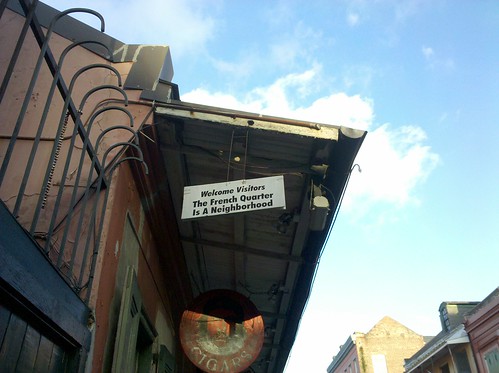
The French Quarter is a Neighborhood


Last week Latoya Cantrell and Jason Williams called a fair amount of attention themselves for suggesting that it might be time to take some (limited and dubious) action on the short term rental front. Cantrell's bold idea is what they're calling a "soft cap."

Under the current law, people who own property in most non-residential zoning districts are guaranteed the ability to get commercial short-term rental licenses, which allow them to rent entire homes or apartments every day of the year.

There’s no limit on the number of such licenses in each building, so an apartment building can become, in effect, an Airbnb hotel.

Some large apartment buildings in the city have dozens of commercial, short-term rental licenses. The Lens recently reported on a small Bywater apartment building that’s in the process of being converted to full-time Airbnbs.

Cantrell’s proposal would allow just two commercial, short-term rental licenses in each building. Anything beyond that would have to be vetted by the City Planning Commission and approved by the city council — hence the council’s description of the limit as a “soft cap.”

The proposed change would apply to two types of zoning districts: one type of mixed-use district and one type of low-density, commercial district.

Notably, it will not affect some downriver neighborhoods, including Faubourg Marigny and Bywater, which have some of the highest concentrations of Airbnbs in the city.
The vetting process here is the same as one that applies already where there are limits in place. Most of the city is already under a "soft cap."  This process has already come under criticism for being a glorified system of spot-zoning where the determining factor in each decision tends to be the amount of money and influence on the city council an individual property owner can wield. For example, in a few weeks, we'll see how much political sway the developers of the Sun Yard hold. Their poshtel/pool bar proposal was rejected by the Planning Commission. But Counicl can override that for any reason if they want to.

LaToya and Jason also agreed it is time to do a "study on the effects of short-term rentals." That is encouraging. A good time to start learning about a problem is a year or so after your supposed remedy has been enacted into law.  Also the information they're looking for is already available. JPNSI has been compiling and distributing it for a few years now. They're releasing a study this month, in fact. One thing they've found, unsurprisingly, is concentrated wealth.

A few corporations and individuals are gobbling up chunks of New Orleans real estate to profit from the expanding short-term rental market.

"We're talking about 10 individuals (or corporations) that have taken 568 homes off the market and have redirected them toward tourists," said Breonne Dedecker with the Jane Place Neighborhood Sustainability Initiative. "Every unit of housing that is removed from the long-term-residential market has an affect on the market around it."
The city's law is, still, in this very story, described by Mitch Landrieu's spokespeople as "a model for other cities trying to limit, regulate and tax short term rental platforms." But their model is just turning neighborhoods into resort villages to the profit. It needs substantial revision.

LaToya Cantrell would tell you it needs "balance" and that she will do some listening or whatever to determine how that works. But there are obvious actions that should be taken immediately. Here are the two most popular ideas. Short term rentals of "whole home" units should be be banned from residential neighborhoods.  Licenses should be limited to one per individual.  Those are the two most direct means of stopping the conversion of structures into virtual hotels via the STR process.  LaToya's spokesperson claims she is against that.
"The mayor-elect does not support converting structures into virtual hotels via the STR process, especially when those structures can house our residents. She is currently working to strike the right balance on this issue so that the right regulations are in place that protect the cultural fabric of neighborhoods," Mayor-Elect Cantrell's Communications Director Mason Harrison stated in an emailed response.

Recall that Susan Guidry proposed limiting licenses to one per homestead exemption in the original ordinance. LaToya made a big to-do during the mayoral campaign of her having voted for that amendment (although it was clear it wasn't going to pass at the time.)  So why isn't she offering a similar proposal now? 

Jane Place points out that much of the luxury condo development in the CBD has sustained itself through the STR market. 
Dedecker recently took to Twitter to point out two corporations, Stay Alfred and Sonder, have more than 100 STR permits in New Orleans each. 

Stay Alfred, which is based in Spokane, Washington has more than 30 permitted STR in The Maritime apartment building in the Central Business District.

Neither Stay Alfred or The Maritime returned FOX 8's request for comment. 

"[The Maritime] has 106 apartments in it. As of last week, there were 61 permitted short-term rentals in the apartment building with another 21 permits pending, which means 82 out of 106 units are currently or about to be used as short-term rentals. That is 80 percent of a residential building basically being utilized as a hotel," Dedecker said.
Last week, we mentioned Sonder, in relation to its presence in another faux-tel development in Mid-City.  That development's owner, Joshua Bruno, has a history of getting LaToya to listen to him and "balance" things in his favor from time to time. Until she makes a solid commitment to clamping down on STR expansion, we have to assume she's still listening to people like Bruno.

And that is a problem because next they will want to "balance" the French Quarter too. This morning's T-P allows Quarter landlords to whine that the total ban on STRs there is cutting into their racket now.

Michael Wilkinson, also of French Quarter Realty, said that some of his clients have been converting short-term rentals into "what they should've been in the first place: Long-term rentals."

"We're seeing that, which we kind of expected, and some people are keeping them for themselves," he said. "It's put a lot of things on the rental market because of that."
But the large inventory of long-term rentals has made things challenging for landlords. John Ferrara, a longtime French Quarter landlord and a former resident, said it's as challenging to find long-term renters as ever.

"People who had condos and second homes in the Quarter, they used them periodically and then they rented them out the rest of the time. Now they can't do that," Ferrara said. "You can't rent -- I have vacancies for over a year now."
Wither the pied-a-terres? It sounds a lot like the ban is actually doing what it's supposed to do. Notice nobody in this story ever takes a minute to wonder if the problem might have to do with the rent being too damn high. The pro-Airbnb and YIMBYist crowd loves to talk about the sacred value of "supply and demand." At least they do as long as those dynamics are favorable to the investor class. When it doesn't, though, somehow that's a bad thing.
For years, he said French Quarter Realty used to have handouts with listings of apartments and corresponding photos running one to two pages. But now, "we have four pages of apartments."

"I have one client that just rented a $1,200 apartment, a guest quarters behind the main house, that he had on the market and after a year he finally got someone," Ripley said. "It's just been very difficult because it impacts the investment buyer, and now is competing with a whole new market in the CBD."
The "whole new market in the CBD" is where all the STRs are, of course. Real estate just isn't very successful in New Orleans if it is wasted on housing people who actually live  here.

Friday, February 23, 2018

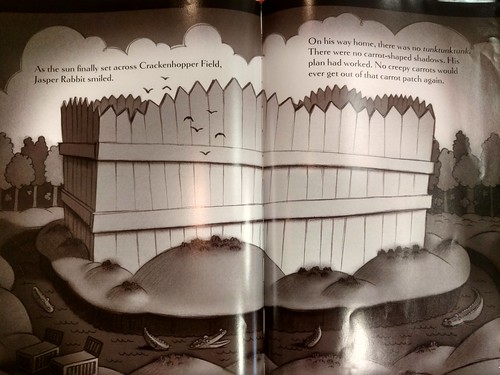
Wall off the carrot patch

This story about the riverfront overlay has been fleshed out a bit since we posted it yesterday. I just wanted to point out a few interesting quotes. First we have LaToya Cantrell seems to think the problem is we aren't giving quite enough away to developers. 
Councilwoman LaToya Cantrell, who supported the Riverfront Overlay plan during her successful mayoral campaign last year, said the city needs to re-examine its entire incentive structure for affordable housing, while calling the units that would have been created by the bonus “minimal.”

She also said a more comprehensive approach could be provided by a study currently underway looking at how to incentivize affordable housing.

“What’s needed is a re-examination of our incentive structure," Cantrell said. "A carrot has to be created.
The overlay allowance isn't enough. We also need to give them carrots. The carrots would be in addition to the land we've already granted to the lords so that they may purpose it toward their own profit.  For example, Sean Cummings here. 
Developer Sean Cummings said the removal of the affordability bonus was needed to “see these properties actually develop over the next 10 years or so.”

Cummings has been the driving force behind several complexes in recent years that tower over the riverfront and over Crescent Park, an amenity he spearheaded for former Mayor Ray Nagin’s administration after Hurricane Katrina.
They let Cummings build an amenity for his condos that we pretended was a public park.  So now they have to let him build all the condos without guilting him over the whole gentrification thing. It's only fair. At least until they can find more carrots.  Anyway, here's another look at our map of the feudal territories. It needs some updating in some areas but Cummingsville is still very much intact.


If its ramparts ever need defending, it looks like Cummings can call on James Gray.  
Councilman James Gray, saying he was generally in favor of taller and denser developments, said the problem was not whether affordable housing was included in the Riverfront Overlay but whether poorer neighborhoods were getting the amenities that richer and more desirable neighborhoods were. But, he argued, low-income residents would likely not want to live in a development along the river anyway.

“I’m not sure I would want to be one of the few poor people in an upscale development," he said. "I’m not sure that’s a favor to me or my children who would be raised as the poorest children in a development.”
Poor people shouldn't be allowed into rich neighborhoods. It's too embarrassing.  Maybe we should look into building some walls or something. It's certainly one way of keeping the carrots in place.

Crackenhopper field