-->
Showing posts with label VA/LSU hospital. Show all posts

Thursday, September 21, 2017

The Distractor tax

We're still trying to get this much needed low barrier homeless shelter built. It appears to have cleared the latest hurdle in this real estate survey.
The city's only plan for the former VA hospital so far is to build a low-barrier homeless shelter on the building's first floor, which spans about 43,500 square feet. The entire building is 746,000 square feet and tops 1 million square feet when the garage is included.

The city acquired the former VA hospital in a property swap that allowed the new VA to be developed on city-owned land next to University Medical Center in Mid-City.
 
JLL took plans for the low-barrier shelter into consideration when it conducted its analysis, and asked potential developers and tenants whether the homeless shelter would be an issue.

"It was generally deemed that the presence of the facility would serve as a distractor," JLL wrote. "However, the opportunity prevails to successfully plan the various uses to create separate entrances, arrival areas and divisions in order to mitigate the impact."
Can't have too many "distractors" getting in the way of our development. They sound like some dickhead coach telling his players to "stick to football."  Cities are diverse places. There are distractors everywhere.  They aren't always great for maximizing profits so we do everything we can to eliminate them. Or at least, we move them across town.

It's interesting to see now that LaToya Cantrell has successfully NIMBYed the homeless shelter away from Ben Kleban's charter school and over to the VA site, that she wants to be credited as one of its most prominent advocates.   At least today's article provides some of the context, even if it does let her get away with the claim. Her statement is OK, although it still couches everything in terms of ROI than in anything human.
"The value of the low barrier shelter far outweighs the speculative value of redeveloping the site without the shelter there," Cantrell said. "Eventually, the city and its partners could end up recouping much more value from reduced E.R. and jail costs than it could if the shelter were not in the VA to begin with."

She added that "we need to be focused on the long term viability and best use of the property, not the short-term return for what was a non-income producing property to begin with."
Regardless, whoever takes on the site, is going to refer to this study eventually.  It's how they're going to justify whatever big tax break they inevitably end up asking for.
The analysis suggests that any developer who would be brought on to convert the property to a commercial use would need a "financial enhancement" because of the cost.
When they do, they can expect Mayor(?) Cantrell will have a sympathetic ear.  During last night's forum she talked briefly about economic development saying, "We have to roll out the red carpet" with "incentives" for developers. Adding that the current climate is "too politicized." In a nutshell, she was saying she favors more public giveaways to developers done more quickly with less public oversight and accountability.  Which is why anytime the real estate industry successfully identifies a "distractor," it means the rest of us will have to pick up the burden of that for them.
Monday, May 11, 2015

Yes, but will it even open?

NOLA.com, whose job it is to find answers to these questions, nonetheless asks us.  "Will the Mid-City hospital complex spark an economic boom?
Paolo Zambito, LCMC Health's senior vice president for strategy and business development, said the goal will be to focus on several destination programs: ear-nose-throat and skull-based treatments, neurosciences offering deep brain stimulation to treat Parkinson's disease, a possible burn unit and a focus on cancer with new technology.

LCMC Health officials also feel strongly about the role of clinical trials and growing the pharmaceutical industry in New Orleans, he said.

Zambito spoke Friday at a real estate seminar at the University of New Orleans that focused largely on what new hospitals opening means for the future of real estate and the local economy.  University Medical Center, operated by LCMC Health, sits next to a new $1 billion Veterans Affairs hospital, set to open next year.

The precise impact of the combined $2.1 billion medical complex on the surrounding Mid-City and downtown neighborhoods is still unclear, but many are bracing for big changes.
 So maybe! But you do have to open the thing if you want to find out.
The state’s higher education institutions would get $575 million of the $650 million, leaving health care facing a sizable shortfall.

House Appropriations Committee Chairman Jim Fannin, R-Jonesboro, said health care would get more money if the Legislature raises more revenue, makes other budget cuts or if other money is collected through higher taxes.

The shortfall in health care means less money for health care for poor children and their mothers, the developmentally disabled, the working poor who don’t have health insurance, the elderly living in state nursing homes and state aid for the public hospitals now under private management, including the big New Orleans hospital slated to open in August.

Thursday, February 28, 2013

In which Jindal ruins NOLA's biggest economic development project in decades

Oh and public health services too.
The initial agreements inked by the nonprofit, the LSU hospital system and the state calls for the company to put up lease payments that will be used to draw down federal dollars to run the hospital. Employees at the Interim LSU Public Hospital will lose their jobs as state employees, but can reapply with the new company.

Some have raised questions about whether the UMC's future finances depend on the state taking the federal Medicaid expansion envisioned under Obamacare, which Gov. Bobby Jindal has said he will reject. The final business plans for the hospital assumed the state would be expanding Medicaid to hundreds of thousands of currently uninsured people.

Tuesday, December 11, 2012

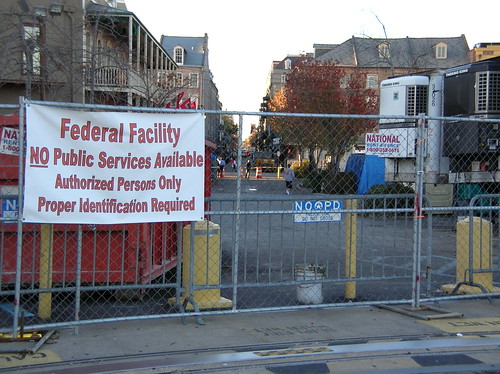
Federal City

Federal City

Quite a city of juxtapositions we've become.  Our school boards and our public health services are all being farmed out to privatized management.  The streets are policed by several private security outfits. We've tried and will no doubt try again to grant taxing authority to tourism magnates.

But what hasn't been privatized has been taken over by the Feds.

Orleans Parish Sheriff Marlin Gusman and U.S. Department of Justice officials announced a long-awaited agreement on Tuesday for federal oversight of the city's notoriously shoddy and dangerous jail. The 49-page consent decree amounts to a blueprint for reforms and staffing fixes at a jail facility where 38 inmates have died over the past seven years, where escapes are commonplace, and where safety and sanitary conditions are routinely compromised, critics say.

Signed and submitted to U.S. District Judge Lance Africk for approval, the document marks Gusman's office as the latest local agency in New Orleans to succumb to outside oversight.

But despite having either sold everything off or turned it over to outside direction, the cost of everything just keeps going up and up and up. Funny how that works.

Tuesday, October 09, 2012

This week's burning question

This:

Now, the threat of a breakdown in the city's medical services is real....very fucking real.  I think perhaps even more so than in the immediate aftermath of Katrina.  Jindal has just turned off life support to an already overwhelmed hospital system in the city.  Tulane Medical Center will, no doubt, become overloaded in short order.  I think this could turn into a crisis very quickly.

My question is...where are all the Save Charity folks now?  Where are all the people who claimed their real concern was the state of health care in the city?  Was the whole Save Charity campaign really about what was best for the city or was it simply about the nostalgia for brick and mortar?  Why aren't those people launching a campaign to "Save LSU Medical Center in New Orleans"?
Dambala asked the above yesterday.  Since then we've circulated the question around the various parallel internets.  So far my favorite answer I've gotten is the "Save Charity" ringleaders have gone on to grad school. One thing our neglected crumbling impoverished city can do is launch academic or entertainment careers for people willing to take advantage.

Thursday, July 19, 2012

Set it up and knock it down

Louisiana Budget Project's Jan Moller watching DHH Secretary Bruce Greenstein testify to the Legislature about the Jindal Administration's proposed Medicaid cuts.

LPB's Steve Spires analyzes those cuts here
Responding to a decrease in federal aid to Louisiana’s Medicaid program, the Jindal administration announced plans to cut funding for LSU health by nearly $330 million, which comes to almost one-fourth of the system’s total budget. The amount set aside for treating the uninsured was cut roughly in half.

Despite the administration’s insistence that the cuts will encourage “modernization” and “efficiencies,” it’s hard to see how cuts of this magnitude can be made without hospital closures. With the latest cuts, the LSU health system’s budget has now been slashed by 36 percent (adjusted for inflation) since 2008-09.

To put things in perspective, the $330 million cut is slightly less than the combined budgets of Lallie Kemp Regional Medical Center in Independence, Leonard J. Chabert Medical Center in Houma, University Medical Center in Lafayette, WO Moss Regional Medical Center in Lake Charles, and Washington-St Tammany Medical Center in Bogalusa.

Clearly, a budget cut that is equivalent to shutting down five of Louisiana’s 10 charity hospitals will have a negative impact on access to services. Further complicating the cuts is the need for LSU to maintain adequate facilities for medical students.

While the decrease in federal aid was not the fault of state policymakers, placing the majority of the cuts on the backs of LSU hospitals—and by extension, the uninsured—will jeopardize the ability of the system to achieve its core mission, and is likely to cause significant harm.


Take a ride down Canal Street these days and you're bound to notice many a "crane on the skyline" tasked with erecting LSU's new state of the art hospital facility. On Sunday, New Orleanians will be treated to the spectacle of a large building implosion downtown in order to make way for a stage of this project. But today, in Baton Rouge, the Governor appears to have already pre-imploded this project as well.

Friday, September 16, 2011

Surprise surprise not at all

Nobody could have predicted that the hospital fight was all about Tulane wanting more control over things and Ochsner wanting a piece of that. Except some of us said so over and over again to no avail but whatever.

Ochsner controls a huge portion of the local hospital market. And while neither side would speak on camera, or confirm or deny whether a deal is in the works, they do say they are each looking at other partnerships.

A statement issued by Tulane says "in the age of health care reform and a changing marketplace, such discussions are common. Tulane said that its conversations with potential partners have been ongoing for years and are only at the fact-finding stage.

Ochsner said it "won't comment on hypothetical business arrangements" but that it "regularly evaluates partnerships and collaborations" as it looks at costs, patient health outcomes and the overall health care system.

The last time a change for Tulane Medical Center was in the news was when Senator David Vitter, State Treasurer John Kennedy and House Speaker Jim Tucker proposed the state abandon plans for part of the new 424-bed teaching hospital (UMC) in favor of a deal with Tulane Medical Center. This afternoon Vitter's office said he has not been involved in the latest Ochsner-Tulane discussions.
David Vitter says he had nothing to do with it. Riiiiight. If you believe that I've got a nice... I don't know let's say slightly used Canal Street real estate... to sell you.

Wednesday, August 03, 2011

Before somebody drops a house on you too

Local "preservationists" have not only nearly killed the hospital project (despite failing to save the neighborhood it is designated for) they've also managed to sprinkle little packets of blight all over town.

Away from the microphones and photo-ops, residents carped that if Landrieu was so zealous about eradicating blight, why was the city allowing houses removed from the site of the planned medical center to be plopped down helter-skelter in their neighborhood and left open to the elements. In the last four months of 2010, no fewer than 21 of the 73 houses removed — at Landrieu’s behest — from the medical center site wound up in the Triangle.

The medical center site, which will eventually accommodate a new Veterans Administration hospital as well as the Louisiana State University teaching hospital, is being cleared of houses that stood on 27 blocks bounded by Tulane Avenue and Canal Street, between S. Rocheblave Street and Claiborne Avenue. Early plans for the multi-billion-dollar project called for simply demolishing the houses. Most dated to the late nineteenth and early twentieth centuries and 165 were deemed of historic significance — too many to move. But upon taking office, the Landrieu administration reviewed the situation and yielded to preservationist pressure to save as many as possible.

Thursday, July 07, 2011

Maybe it's worse than I thought

Maybe David Vitter really has managed to kill the hospital project.

Update: Mitch responds

I'm not sure what the "Open Charity" movement thinks they're even fighting for any more aside from giving Tulane an inordinate share of a far smaller pie in the future. Congratulations on giving David Vitter what he wants, assholes.

Thursday, June 16, 2011

Time to build

Mitch is right.

The only marginally cogent argument against this hospital project was its negative affect on people living in its footprint. That matter is now a fait accompli. I and others have been arguing that it always was anyway but, for a time, I could at least momentarily understand the point of view of people who were unable or unwilling to see past this issue to the next move. The trouble is, anyone with the slightest sense of how things work in this town, can't give these people the benefit of the doubt for long.

A key factor, if not the factor in New Orleans' decline relative to other American cities has been the smothering grip on progress exerted by its social and economic elites. Ever content to remain the richest club in a poor and shrinking city, New Orleans' socialites resist any and every effort to grow the economy. They dress this conservative agenda up as "preservation" but it's better described as ossification. What gets "preserved" are old buildings, staid pageantry, anything that might make easy packaging for a hotelier or a filmmaker to sell. This keeps the New Orleans brand out there and helps enlist the aid of your duller intellectuals and interloping Jazzfest fans who don't want their getaways to Culture Disney disrupted.

I hate to have to give this lecture over and over but, as the Mayor points out, on the few occasions when the preservation elite loses these fights, the city ends up winning big.

The project's naysayers offer a familiar refrain. There was opposition to the Superdome in the 1970s, the Convention Center in the 1980s and the Arena in the 1990s. The Dome was threatened with dozens of lawsuits and was called "the world's biggest pimple." The Arena was called a "gamble." But today those three visionary economic development projects provide this region with an annual economic impact upwards of $2.8 billion.

Quite simply, if done right, the UMC has the potential to be the largest, most catalytic economic development project in this city's history -- surpassing the Superdome and Convention Center -- and will place our city and state at the forefront of innovation and change in America.


We'll be watching the T-P idiot page this weekend for some smug asshole's rebuttal to Mitch's op-ed. Maybe David Simon will say something.

Tuesday, June 14, 2011

Idiots

The whole concept behind the UMC in the first place was finding a gimmick by which Tulane could force its way into the conversation.
The UMC Corp. was constituted last year, after a long tussle between LSU and Tulane, as a state-affiliated entity whose governing board includes four appointees from Jindal, four from LSU, one from Tulane and two from other schools. The board has management oversight of the hospital -- including determining the size, scope and design of the complex -- with the state responsible for construction.

Vitter characterized Jindal's letter to the board as a victory, though Jindal and Landrieu both said a three-campus model is inherently inefficient. Jindal said his administration's previous, informal conversations about Tulane becoming a more integrated UMC partner would involve closing its downtown hospital and moving its "intellectual capital, its physicians and its patient base" to the new complex. As it stands now, Tulane's primary interest in UMC is placing many of its residency slots there.

Details aside, the senator and the governor agreed on the broader purpose: confirming the UMC board as an independent entity.

"It's the governor making clear that (the board's) mandate isn't to be put into any box by LSU or anyone else," Vitter said.

Jindal added: "There has been a sense that LSU has been aggressively pushing its vision. ... The board shouldn't be limited by anything LSU has done. Their job is not just to kick the tires, but to be an independent body."


Way back at the beginning of this fiasco, we tried to tell the "preservationists" who were holding up the hospital project that all they were doing was Tulane's dirty work. Now, thanks to David Vitter and the NOLA "preservation" movement, they're getting what they want. Tulane gets a huge share of a pile of federal money they were in no way entitled to before this bullshit began and, of course, a larger share of a smaller hospital.

And that's the story of elite New Orleans in a nutshell. Big fish rule the small pond. Meanwhile the city's economy goes stagnant and the neighborhood remains flattened anyway as collateral damage. Maybe some of these big fish will be happy to buy up the cheap land too.

Monday, June 13, 2011

Hospital Redux

See Pat's timeline. Yep. That's pretty much what just happened. As I tried to say the other day, Step 10 on Pat's list

Step 10: Have state and federal officials representing competing intereststs attempt to derail the project at the last minute under the name of hostage taking fiscal conservatism


always seemed inevitable to me which was why the various "Save Charity" preservation efforts were always either intentionally or accidentally working to enable it.

Saturday, June 11, 2011

Vitter-Tucker-Kennedy-Tulane-Oschner Hospital

This was pretty much the plan from the start. Elites get what they want. Neighborhood gets flattened regardless but now with the added benefit of having nothing of value added to the city's health care infrastructure and, of course, far far fewer jobs. Way to go, guys!

My father just screamed at me about this this afternoon because he's somehow decided it's my fault. So I feel compelled to point out that I've been hinting for quite some time that the misguided "preservation" efforts were really all about protecting David Vitter's friends all along. It's not my fault people would rather listen to idiots like Tom Piazza.

Tuesday, August 25, 2009

Two LSU/VA points

1) I would have just posted this on Greg's blog but I don't feel like going through the rigamaroll of registering. His post is about the revelation that the expected synergistic sharing of facilities resources between the two hospitals, which was a major selling point of the project, has been scrapped due to the now out-of-sync timing and funding for each hospital. I've noticed that opponents of the new hospital, who have worked diligently to delay or obstruct the project, are now claiming that the success of their efforts proves the dishonesty of the plan in the first place. I find this less than persuasive.

2) This is an interesting turnaround about which I was previously unaware.

Meanwhile, Retired Lt. Gen. Russel Honore added his voice to those calling for the federal government to help pay for a new hospital to replace Charity, a shift in position for the man who commanded Joint Task Force-Katrina in the wake of the 2005 storm. In May, Honore told The Times-Picayune that Charity should have been reopened after the storm and that "the state of Louisiana needs to pay for its own damn medical center."

"Contrary to what I may have said in the past, the federal government needs to step up and provide a decent grant (to replace Charity) because the storm did destroy the hospital, " Honore said last week.

"I think a medical center or teaching hospital is something the city needs and I don't think it can fit in Old Charity, " Honore said. "I do think it's time for FEMA and Health and Human Services to step up and help the city replace what was Charity with what could be the beginning of a world-class medical center."

"We need one in New Orleans and it needs to be able to withstand a flood, " he said. "This time the first floor needs to be a parking lot."

Wednesday, June 24, 2009

Catching up

It seems that every time I go away... even if for a few days... all hell breaks loose around here. Luckily I don't get out of town too often. Bad for my valve, you know. Y'all just need to be thankful I don't commute from Sydney or some crazy shit like that. Really who would hire someone to do that anyway?

  • I just got back from Pensacola Beach where the entire island is being taken over by something called Portofino Island Resort which is a timeshare/hotel monstrosity occupying four high rise towers on the last piece of real estate that isn't reserved for the Gulf Islands National Seashore. In addition to the resort itself, the company also owns and operates several attractions on the island, the most prominent of these being a Disnesyesque boardwalk featuring various boutique jewelry and tchotchke outlets, a surf shop, a daiquiri bar, and, of course, a Hooters.

    Guests who don't want to drive the 1 and 1/2 miles between the boardwalk and the resort can board a complementary catamaran which departs each location on the hour. They can also hire a taxi, which isn't difficult to do since the cab companies are fairly used to making this trip. I also noticed that, on weekends, there is a "trolley" service for hauling tourists up and down the same route.

    That may seem like a lot of effort expended in the interest of keeping visitors moving between the pool bar and the toe-ring shop with minimal difficulty but at least the cost of it all appears to be fronted by the private businesses and individuals who benefit from these services. Meanwhile, in New Orleans, the international private company in charge of our public transit system seems to prefer spending our tax dollars on similar tourist amusements.


  • I'm terribly disappointed in South Carolina Governor Mark Sanford. When I heard that he had turned off his cell phone and gone missing for a few days without notifying his family, friends, or... anyone in his office I was not just sympathetic but downright moved. It's so difficult to find quality alone time these days. If a State Governor can't manage to pull it off, even if for a day or two, what chance do any of the rest of us have anymore? When it turned out he was actually in Argentina banging his "dear dear friend" I was devastated. Instead of an elected leader making touching statement against the encroachment of the modern world upon the private soul, Sanford was just another "family values" politician having a hypocritical affair. How boring.

    And then, of course, there's Fox News not missing a beat. They do this all the freaking time.


  • Mark your calendars. It's happening again. New Orleans Bloggers will present another conference on the status and future of the city as it approaches the fourth anniversary of the Federal Flood. Details (late as usual) coming soon.


  • Here's the point about the Bill Jefferson trial that doesn't get talked about much. If Jefferson's attorneys are correct in asserting that the Congressman didn't specifically sell any of the official functions of his office, then what is he actually accused of selling? His brand name? His supposed clout as a consultant? If so, how is this any different from the brand that any pol sells when he or she takes a job with a lobbying firm? If we're going to put Bill Jefferson in jail for this, shouldn't we start going after all of them? Not that that isn't an unpleasant thought....


  • Prediction: The minute everyone is satisfied that Tulane has what it wants, the paper will not run another word against the construction of the new hospital in Mid-City.


  • Gotta go with the Tigers tonight. Despite what it says above the T-P masthead this morning, LSU did not "drop the ball" last night. They just ran up against an outstanding pitcher having the game of his life. What a great tournament this has been!


  • The Landrieu faction is ruining your chance at a more just health care system, America.
    The real risk is that health care reform will be undermined by “centrist” Democratic senators who either prevent the passage of a bill or insist on watering down key elements of reform. I use scare quotes around “centrist,” by the way, because if the center means the position held by most Americans, the self-proclaimed centrists are in fact way out in right field.

    What the balking Democrats seem most determined to do is to kill the public option, either by eliminating it or by carrying out a bait-and-switch, replacing a true public option with something meaningless. For the record, neither regional health cooperatives nor state-level public plans, both of which have been proposed as alternatives, would have the financial stability and bargaining power needed to bring down health care costs.

    Whatever may be motivating these Democrats, they don’t seem able to explain their reasons in public.
    Their reasons are that they quite accurately see themselves as representatives of their friends in the insurance industry. Those are the only people they listen to.


  • If you ever have an opportunity to adopt a cat, I can't recommend Maine Coons highly enough.* I've owned a few cats in my time but Sovereign was unlike any I had known. Most cats tend to have a sort of pompous aloof aspect to their personalities. They accept you but they're sort of above you. But Sovie was surprisingly unpretentious and affectionate... Clownishly playful and genuinely friendly without any of the typical feline standoffishness... more like a calmer than usual dog, really. And the dude was huge. I still think I see him around the house sometimes. I'm gonna miss that guy.


*Sovereign was a rescue cat from the Baltimore Humane Society. I would always recommend rescuing and animal from a shelter regardless of any breeding preference.

Update: Here's one I almost left out. Can I get a WTF on this, please?

Tuesday, May 12, 2009

Congratulations. You've been rejected by FEMA

I'm still having trouble understanding how less money for our hospital is going to get us a hospital faster.

Update: This morning, Puddinhead left a comment below a previous post on this topic which read, in part,

The role of Tulane in attempting to muddy the waters to it's own benefit has become more publicly understood, but I will be very surprised if before all is settled another "powerful interest" isn't revealed to have a behind the scenes hand in attempts to scuttle the entire project to replace the teaching hospital in New Orleans, and their name turns out to start with "OCHS" and end with "NER". I'll become more suspicious of this if our beloved Sen. Vitter begins to take a more vocal "slow things down" position.


This afternoon, on NOLA.com, we read

Efforts to gut and restore Charity, rather than build a new facility, also are supported by some historic preservationists and community groups, as well by Sen. David Vitter, R-La.

Vitter, according to spokesman Joel DiGrado, believes that a public hospital should have already been rebuilt downtown, that LSU has delayed that far too long, that its plan is too big and expensive and that "gutting the old Charity shell and rebuilding a state-of-the-art hospital in it could save a lot of money."


Teaching hospital downtown hits a roadblock. There's Vitty right on cue to nod his approval. Funny how that works.

Monday, May 11, 2009

Big Shiny Parking Lots

Otherwise known as "Phase II"

BATON ROUGE -- Architects recently unveiled renderings for the teaching hospital that Louisiana State University System executives and state facilities managers have envisioned for lower Mid-City since before Hurricane Katrina.

The three concepts vary, but all depict a massive medical complex -- three wings of in-patient beds, a clinic building, a diagnostic and treatment wing with the emergency department, a parking garage and a central energy plant -- that would reach every block in an area bound by South Claiborne Avenue, Tulane Avenue, Galvez Street and Canal Street. But, in fact, fewer than half the structures in the drawings actually make up the proposed $1.2 billion, 424-bed hospital.

Architects dubbed that "phase one" as they presented the drawings. The rest of the buildings -- duplicates of everything except the energy plant -- are designated as "future" construction in "phase two."


And then near the end of the article

State facilities chief Jerry Jones said he doesn't think the land would be used for construction at all before hospital expansion. He said it likely would be "surface parking" and landscaping.


Really, though, it's just the latest in a string of disappointments regarding the Charity Hospital situation which has slowly but surely devolved into one of those typical New Orleans all-sides-at-fault disasters.

LSU had been lobbying for a new facility well before old Charity was damaged by the Federal Flood. Depending on who you ask, it appears that they have sought to use the (disputed) severity of that damage as a pretext... or valid reason for finally moving on those plans. The arguments for or against the need for a new building, for me, continue to be inconclusive. But even if you're willing to concede that the old building is either irreparably damaged or obsolete as LSU claims, it's still hard to find sympathy with the current plan to bulldoze 70 acres of a neighborhood in an historic district and replace it with an urban campus. The more we learn about LSU's plans for this land, the more disgusted many of us are with it.

Meanwhile the controversy has provided a new opportunity for other longtime Charity-related grievances to be aired anew. It is discouraging to see the building animosity toward LSU provide an opening for Tulane to make a grab for more control of Charity's governing board. Although the uptown private institution is not without it's sycophants most of us understand the hazards of allowing them more sway than is absolutely necessary over public facilities in New Orleans.

Cynical bastard that I am, I tend to suspect that the Tulane power play along with a general anti-public hospital sentiment among certain segments of the city's socialite structure are either behind the opposition to LSU's plan... or at least tangential beneficiaries of it. It's an old but typical storyline in this town that sees progress and economic development stymied in the interest of protecting one or another plutocrat's piece of an ever-shrinking pie.

This is not to say that the preservationist "Save Charity Hospital and Lower Mid-City" people are being anything but earnest advocates for the building and the neighborhood. I believe they are on the up and up... and certainly have a point when it comes to the threatened neighborhood. It's just that experience has taught us that preservationism is often a legitimizing side-argument to push an anti-progressive agenda.

The point is, there is a lot going on here... most of it bad. But LSU is not the only... or perhaps not even the worst offender.

Thursday, May 07, 2009

Inside baseball?

In this morning's legislative rundown, Jan Moller describes Jim Tucker's bill to radically reorganize the governance of the New Orleans Charity Hospital (should one ever exist again at some point) and makes the following crucial statement.
The debate is very inside baseball and may never have any practical effect on patient care. But LSU, Tulane, Dillard, Southern and Xavier all want to protect their turf.
This seems like a question that deserves more attention. I was under the impression that, under the previous complicated arrangement by which the teaching hospital operated, LSU absorbed much of the cost of treating uninsured or medicaid patients and provided the bulk... if not all... of the on-call residents in rotation at Charity (and also at Children's). I have a limited understanding of the structure here and so am posting this more as a question than anything else. But if the other schools are looking for a greater share of management authority, will they also be assuming greater responsibility for operation? Is a private institution like Tulane willing or even able to take on more of the public health business?

I really would like some feedback on how this would work. At the very least, can't we say that Moller is glossing over the potential "practical effect on patient care" here?

Saturday, April 18, 2009

Here's how confused things are

Citizen "activists" are now arguing against FEMA compensation. The "save Charity" movement has completely jumped the shark. In a perfect world, the organizers have a point. In this world, they're only going to keep us from getting the hospital we need.

Edit: That sounds snarkier than it need be. I only mean to say that I think we're past the point where anything can be done other than build what LSU wants.