-->
Showing posts with label robots. Show all posts

Friday, May 27, 2016

How will we all die under President Trump?

The choices right now are

1) Superbug
(CNN)Superbugs could kill one person every three seconds by 2050, the equivalent of 10 million people a year, according to the final report last week from the Review on Antimicrobial Resistance, established in 2014 to keep the world from being "cast back into the dark ages of medicine." 

The authors highlight the increasing burden of resistance and call for greater awareness of the problem, including the need for public campaigns beginning as soon as this summer.
2) Loose nukes
The term "wake-up call" is a tired cliché, but it is appropriate in the case of Command and Control, the frightening new exposé of America's nuclear weapons mishaps by Fast Food Nation author Eric Schlosser. (Click here to read an excerpt and my detailed review.) In short, Schlosser delivers a book full of revelations that left me agape. While we still worry in the abstract about Iran and North Korea and Pakistan, it's easy to forget that we still have thousands of our own ungodly devices on hair-trigger alert at this very moment. And even if we never drop or launch another nuke on purpose, these weapons are, in his words, "the most dangerous machines ever invented. And like every machine, sometimes they go wrong."

That's what the book is about. Through hard-fought documents and deep digging and extensive interviews, Schlosser reveals how close we've come, on numerous occasions, to a domestic nuclear detonation or an accidental war in which there are only losers. Command and Control will leave many readers with a deep unease about America's ability to handle our nukes safely. Schlosser's hope is that this unease will beget a long-neglected debate about "why we have them and when we use them and how many we need." But his book is no screed. He delivers an engrossing page-turner. Would that it were fiction.
That interview with Schlosser is from 2013. But since we're talking about Hiroshima today, it's worth a look.

3)  Robot uprising
One factory has "reduced employee strength from 110,000 to 50,000 thanks to the introduction of robots", a government official told the South China Morning Post.

Xu Yulian, head of publicity for the Kunshan region, added: "More companies are likely to follow suit."

China is investing heavily in a robot workforce.

In a statement to the BBC, Foxconn Technology Group confirmed that it was automating "many of the manufacturing tasks associated with our operations" but denied that it meant long-term job losses.
 4) Trump Drunkeness
In his speech at an energy conference, Trump called for cutting regulations and for building the Keystone XL pipeline, which the Obama administration has blocked.

"I'm drunk on Trump," proclaimed John Olson, a North Dakota unbound delegate and attorney representing oil, natural gas and coal companies.
It's probably that one.

Wednesday, December 23, 2015

Happy Hostilidays

The arms race in the  War on and for Christmas is escalating.


Still liked it better the first time I saw it


Meanwhile, blessings to you and yours.
A cafeteria worker in an Idaho middle school said she was fired for giving a free meal to a student who told her she was hungry and didn't have money to pay for it, The Idaho Statesman reported Wednesday.

Human resources for Irving Middle School in Pocatello sent Dalene Bowden a termination letter that stated she was fired for stealing school district property and for inaccurate transactions in serving food, according to the report.

Bowden told the newspaper that she offered to pay $1.70 for the 12 year-old student's meal, but her supervisor declined the money.
God bless us every one
Food stamp benefits for childless, able-bodied people under the age of 49 are set to expire Jan. 1, with the first stop of payment to take effect Jan. 6. A spokesman for Gov. Bobby Jindal said the Department of Children and Family Services still plans for that to take place.

Jindal's communication director, Mike Reed, said in a brief interview Monday (Dec. 21) that the only way the Jindal administration would extend the food stamp funding to beneficiaries early next year is if a federal judge orders it. A New Orleans-based advocacy group has filed a motion for a temporary restraining order to do just that, but the case has not yet been heard in U.S. District Court. br/>
"The best way to break the cycle of poverty is for individuals to get a job and get off of government assistance. Having a job is empowering," Reed said in a statement. Edwards' "decision will mean more able-bodied Louisianians will be dependent on the government and discouraged from joining the workforce."


Everybody be safe.

Especially if you're out doing some last minute shopping.


Sunday, July 05, 2015

Like Uber but for having a governor

We're pretty much just making do with some apps and a robot that signs things.
Since announcing June 24 that he was seeking the Republican presidential nomination, Jindal has been in Louisiana only one day, according to campaign news releases and the lieutenant governor’s records. And with just six months left in his administration, Jindal is expected to spend more and more time in the early primary states of Iowa, New Hampshire and South Carolina.

He’ll be governing Louisiana by cellphone.

“He has a tremendous amount of horsepower and bandwidth,” said Timmy Teepell, Jindal’s longtime political strategist. “He’ll be able to campaign and handle his duties as governor without a problem. He will keep a very busy schedule.”
So, you know, thanks, sharing economy. 

Wednesday, March 04, 2015

Most people are not necessary

The work you do is probably more easily automated than you think it is.
Automated Insights, a company that provides language generation software to The Associated Press and other organizations, announced Wednesday the news cooperative will use the software to produce thousands of stories about collegiate sports.

The Associated Press will begin publishing automatically generated sports stories this spring, beginning with Division I baseball, according to a press release.
We could see these developments as an opportunity to de-couple the right to a decent living from the obligation to perform labor, however pointless.   Or we could continue to compete with one another in a stupid race to see who "deserves" more.  Which way do you think we'll take that?

Monday, January 12, 2015

Links

  • John Barry takes on a favorite rhetorical ploy set out by the oil and gas industry in its argument against the SLFPA-E's lawsuit.
    It's not the levees.

    For years the state has been told that the levees have caused the tremendous land loss across coastal Louisiana, even where land loss was greatest — Terrebone, Lafourche, and western Jefferson Parish. But it ain't so. 

    Don't take my word for it. Ask the Louisiana Mid-Continent Oil and Gas Association, the trade association for Exxon Mobil, Chevron, Shell, BP, and other major oil companies. True, a U.S. Geological Survey study including industry scientists concluded that across most of the coast oil and gas operations caused "only" 36 percent of the land loss. But the percentage varies from place to place. Mid-Continent studied the area of greatest land-loss — Terrebone and Lafourche — and concluded that there "canal development tended to be the overwhelming cause of wetland losses." 

    Mid-Continent did not say what percentage was due to this "overwhelming cause," but in 2006 the Louisiana Department of Natural Resources did. DNR attributed a whopping 76 percent of land loss in the Barataria and Terrebone basins to industry canals and the "altered hydrology associated with oil and gas exploration and drilling." In that part of the state, it's not the levees.
    Last year, the legislature passed a law designed to squash the lawsuit.  Bobby Jindal is defending that law in court. 
  • Uber but for news.  Disruption has come to journalism in a big way
    The writing software, called Quill, was developed by Narrative Science, a Chicago company set up in 2010 to commercialize technology developed at Northwestern University that turns numerical data into a written story. It wasn’t long before Quill was being used to report on baseball games for TV and online sports outlets, and company earnings statements for clients such as Forbes.

    Quill’s early career success generated headlines of its own, and the software was seen by some as evidence that intelligent software might displace human workers. Narrative Science CEO Stuart Frankel says that the publicity, even if some of it was negative, was a blessing. “A lot of people felt threatened by what we were doing, and we got a lot of coverage,” he says. “It led to a lot of inquiries from all different industries and to the evolution to a different business.”

    Narrative Science is now renting out Quill’s writing skills to financial customers such as T. Rowe Price, Credit Suisse, and USAA to write up more in-depth, lengthy reports on the performance of mutual funds that are then distributed to investors or regulators.

    “It goes from the job of a small army of people over weeks to just a few seconds,” says Frankel. “We do 10- to 15-page documents for some financial clients.”

    Now that it's putting them out of work too, I wonder if maybe the mainstream of our press corps will finally pick up on how this is not such a terrific trend for people in various other industries also.... before they're all replaced by robots that is.


  • Get ready for months and months of Obama legacy talk.  You might think that this NY Mag article has blurbed it to death already, though.  Some of those are ok.  Andrew Bacevich and Mike Davis get in a few pretty good shots.  But a lot of it is pretty dumb too.

    Here's a better look at Obama's legacy  (and the useless punditocracy that enabled it) from Tom Frank.
    But let this pass. When historians seek to explain the failures of the Obama years, they will likely focus on a glaringly obvious, and indeed still more hard-headed explanation that the apologists for Obama’s enfeeblement now overlook: that perhaps Obama didn’t act forcefully to press a populist economic agenda because he didn’t want to. That maybe he didn’t do certain of the things his liberal supporters wanted him to do because he didn’t believe in them.

    Think about Obama’s legacy in this context: The most consequential issue facing Americans these days is the gradual reversion of their economy to a 19th-century pattern. In a matter of 30 years, talking about this transformation has gone from being the kind of thing you hear at union strike meetings to something that wins the National Book Award and that almost everyone recognizes to be true—I mean, even George W. Bush acknowledged the problem of growing inequality back in 2007.

    Yet the current leadership of the Democratic Party has been unable either to reverse the trend or to make political capital out of it.
  • Survival condos! Perfect marriage of the the victory of the one percent over everything with the  fetish for apocalypse survivalism so pervasive in pop culture.  At first glance, you'd think that there'd be a market for this in New Orleans.  "How much did you pay for your evacuation condo?" But I think the wealthy people buying up all of our housing are already using it as second homes anyway.


  • Speaking of people being priced out of cities in favor of nice stuff for rich people, here's Detroit.
    — A group of shopkeepers who survived 30 years of retail decline on downtown's Woodward Avenue have been given court-ordered eviction notices just as the area booms with new upscale life.

    The small retailers were based on the ground floor of the Himelhoch building, which is surrounded by hundreds of millions of dollars in investment that has meant the rebirth of historic buildings such as the Broderick Tower and the adjacent David Whitney Building. The M-1 Rail streetcar, slated to open next year, will have its Grand Circus Park stop in front of the Himelhoch's Woodward Avenue entrance.

    The seven-story Himelhoch is home to 72 rental apartments available to low-income residents, and for 31 years, most of the ground floor was leased by Larry and Dianne Mongo. The husband and wife ran everything from beauty shops to restaurants in the Himelhoch. With partner John Enot, they were spending thousands of dollars to open two small restaurants in the coming weeks.
    Thanks for staying interested in this neighborhood all the people who matter allowed to crumble for 30 years. They want it back now, though. Bye.  Coming soon to Oretha Castle Haley Blvd, btw.


  • Here's a look at the city council's proposed smoking ban.  A key issue to watch is how the new rules will work in... um... concert with the noise ordinance.
    But the prospect of having people loitering outside late at night to smoke and perhaps drink worries owners of some bars tucked away in residential neighborhoods.

    “It’s the city that’s putting this rule in place, and they’re putting more of these quality-of-life issues on the table without a real good solution to the problems that are going to arise out of them,” said Bill Walker, who has co-owned the Lost Love Lounge in the Marigny since 2010.

    Walker is in the awkward position of also serving as the head of One Marigny, a neighborhood association.

    Cantrell told The New Orleans Advocate last week that she has a solution for that, too: She plans to revive discussion on New Orleans’ seemingly dormant noise ordinance once work on the smoking ban is finished.

    “It’s kind of like having to vet it again with the new members of the council,” she said about the proposed noise ordinance, which drew widespread criticism and prompted a parade of musicians to storm the council chamber a year ago to voice their disapproval. “But I think a lot of work went into that, and that’s why I feel like we’ve got to pick it back up, because of the work, and we’ve got to finish the job on that.”
    All of a sudden you're pushing more quiet neighborhood bars into the dreaded "nuisance bar" category simply as a result of their complying with the law.  A suspicious person would suggest that the neighborhood associations who back the Latoya Cantrells of the world are just interested in shutting down bars by any means necessary anyway.  But since we're all "One City One Voice" nowadays there's really no room for suspicious people anymore.

Wednesday, December 04, 2013

Drone War On Christmas

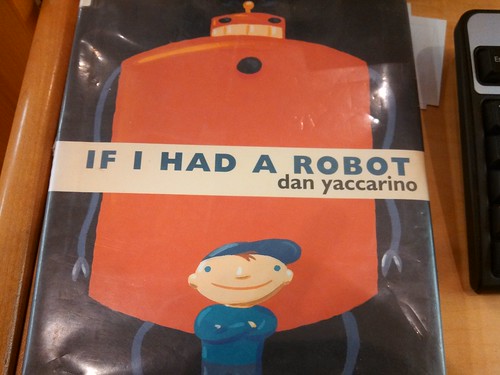
If I had a robot

Maybe not this year, though.  Package delivery drones such as the sort that Amazon proposed this week are technologically possible but still largely impractical for a number of reasons.  Also they don't appear to solve any problem Amazon's customers can possibly identify.

The reason it generates so much excitement, though, is that it attacks a problem large companies like Amazon are continually concerned with and that is eliminating labor costs
The drone fleet would also eliminate a principal line of defense for the disruption Amazon has already brought to the economy. Some would argue that sure, jobs are lost as in-person retailers go out of business due to pressure from Amazon . . . but then again, more deliveries means more business for delivery workers! With drones, though, “delivery workers” are set to go the way of the travel agent and disappear. And while Amazon provides (terrifying) jobs for warehouse workers, it’s only a matter of time before robots learn how to pack boxes themselves.
This is still a pipe dream for Amazon.  But it's worth noting what they dream about. (Electric sheep?) If there's a job out there, rest assured your nation's self-described "Job Creators" are working on a way to give that job to a robot. 

Wednesday, July 10, 2013

Lawyers gonna lawyer

The most important thing I took away from  Gasland 2 which aired on HBO Monday night is we're not only on the way to becoming a third world democracy-in-name-only, we pretty much have been that for some time.

Industry does what it wants to do. People try to take them to court or lobby their representatives and get treated as "insurgents" literally.
Recordings of a gas industry conference at which public relations managers are told to study the Army’s counterinsurgency manual — because “we are dealing with an insurgency” when it comes to protesters and angry homeowners — are both hilarious and horrifying. Mr. Fox’s account of the Pennsylvania government’s hiring of a private company to monitor fracking protesters, an episode not widely covered outside the state, is particularly valuable.
And, in the end, whatever progress the "insurgents" think they might have made is eventually just vetoed by the puppet government anyway. (Seriously, this is exactly what happened.)

I think it's been a while since most of us mattered much at all as citizens.  We're getting less and less important as labor.  And we're getting to a place where we aren't even very important as consumers anymore either.  So the America we're moving toward is one where very large portions of the population are idle and poor and without prospect for much of anything except frightening elites.  But that's okay. They've got ways to deal with that.   
In a series of 2007 interviews explaining his motivation for launching Bulletproof Securities out of his existing real estate business, owner Tom Perrella (who we profile here) pointed to the example of 9/11. “We see things changing and the threats coming here. And it’s something that is going to be more frequent in the future … There’s no way our government can secure and protect with the situation we’re in. We’re trying to bridge the gaps between private security contractors and local government and law enforcement.”

Private security services are nothing new. But the trend to more paramilitary types of protection in an era of demonstrably diminished risk is something new. In addition, as our society becomes economically stratified, with a tiny segment living in a wildly different world than everyone else, you have some rational need for security but also the desire for security chic as another accoutrement of wealth or conspicuous consumption.

But  before we get too sidetracked, the point of all this is  I don't have much hope that the legal process will ever coerce BP to pay what is necessary to fix the dying Louisiana coast.  And given everything I just described above, I think I'm pretty justified there. I know the ongoing litigation is everyone's One Cause For Hope in this regard.  But all that we know about politics and precedent suggests that ultimately BP will be OK and we won't.

In the meantime, though, there's plenty of money to skim out of the process.  Yesterday Dambala published another post about suspicions that insider attorneys have been manipulating the claims process in a way that may ultimately squeeze out far too many legitimate claimants. I can't speak to that directly until I understand more about who precisely benefited from the supposed queue jumping. For instance, this commenter suggests that we look at the specific circumstances of the clients for clues as to why their claims were resolved when they were. 

But it is worth noting that Damabala's post was in response to a New York Times article where we find major media already siding with a multi-national oil company against the people of Louisiana. Dambala concludes,
Well, this poor, little company that is being taken advantage of has decimated the economy, ecology and culture of this state....and the damage continues to this day, with no end in sight.  If Mr. Nocera wants to fly down here and take a tour of the Louisiana coast, I'd be happy to show him the damage that has been done and what continues to unfold.  I can pull up over 100 blog posts on this blog, and others, that document it...much of it on video.  More importantly, I can drive him to the people that are suffering and show him the irreparable damage that's been done to our environment.

A distinction needs to be drawn between the lawyers/judge(s)/politician(s), that comprise the PSC/DHECC vis-a-vis the hard working people of the Gulf Coast, Louisiana folk, in specific.  These two classes of people mix like oil and water (forgive me).

What we have in this article, is a monkey howling in a tree, throwing turds at one pack of hyenas in defense of another pack.  Never mind the slaughter that's taking place underneath.
 The slaughter underneath, that's us. Get used to it.

Monday, May 13, 2013

Turns out your commodified soul really ain't worth all that much

More people should be reading Morozov these days.

Lanier proposes a system of ubiquitous surveillance, with cameras, databases and all. Since we can’t get any privacy, we might at least get paid. “Commercial rights,” he notes, “are better suited for the multitude of quirky little situations that will come up in real life than new kinds of civil rights along the lines of digital privacy.”

Following Lanier’s logic, any correction in the market system — say, price adjustments based on changing demand — would require that extra profits be transferred to consumers. But should you expect a supermarket to send you a check simply because you chose to buy one brand of milk over another? Probably not. Why treat Amazon differently?

To some, the very idea that our every decision is a piece of data to be monetized might seem appalling — and rightly so. What exactly is “humanistic” about Lanier’s vision? Its chief hero seems to be, to borrow a phrase from philosopher Michel Foucault, an “entrepreneur of the self,” always eager to cash in on some personal trivia.

Thursday, May 09, 2013

The Bomb Robot has X-ray vision

Not that this does any good.
Lewis called the St. Bernard Sheriff's Office and deputies closed off both sides of St. Bernard Highway from Mehle to Friscoville Avenues at about 1:30 p.m. The stretch of highway wasn't reopened until around 5 p.m. Wednesday.

The Sheriff's Office sent in a bomb robot that X-rayed its contents but could not make a clear determination of what was inside. So, out of precaution, deputies took the bag to a nearby vacant lot and safety detonated it based on proper procedures.
Because the X-Ray vision cannot see through backpacks, the cops went ahead and set off an explosion... for safety. But, like I always say, you can never be too careful protecting Arabi's donut shops from disgruntled customers.
Lewis said the man had come in the last couple of days and "every day there have been some problems" with him wanting "wanting a free drink, or always something." On Wednesday, Lewis said that the man walked out without paying his check "and then he leaves a bag and it made you wonder."
In any case, finding random pieces of junk and exploding them continues to be a... um... booming business for area bomb squads and their robot friends.
Authorities are investigating a suspicious device found on the side of the National World War II Museum at 945 Magazine St., New Orleans police said in an email.

Officer Garry Flot said SWAT team members have the device and are trying to determine what it is. He said police used a robot to get the device.
Once they determine what the device (shower radio, bicycle tire, turkey sandwich, whatever)  might be, they plan to hold a public detonation later that afternoon along the riverfront.  Citizens may attend the celebratory safety explosion ("Boom Boom en Blanc: Flashmob with a Flash" ) for a modest fee of $40 per person which will go toward funding the NOPD consent decree reform.  If you are going, though, please leave your backpacks at home.

Update: The "mystery device" at the museum was, in fact, fireworks a "weathered" discarded bottle rocket.  So, yeah, I guess the party is definitely on, then.

Tuesday, April 23, 2013

Countless calculator eyes

Yesterday we noted that, in the New Orleans area alone, we've managed to count 7 incidents of false alarm "suspicious package" sightings in the week following the Boston Marathon bombing.  In at least two of those cases, it was reported that local authorities dispatched a specialized bomb robot to investigate.

You have to believe this was an exciting opportunity for them. "Come on, guys, we get to use the robot!" shout our SWAT heroes as they slide down their poles and leap through the windows of their General Lees on their way out to poke at the latest discarded bindle someone has called in.  Some day they'll have an opportunity to use the drone too but they're still not willing to admit they have one of those.  For now, though, they'll have to play with this toy.

We can call it a toy, by the way, because it was well within everyone's understanding that its only practical application in New Orleans this week was going to be recreational.  If at some unlikely point we're on Canal Street watching the robot confront something we think might actually explode, we'll be sure to adjust our terminology.  For example, the other night, @liprap suggested "Hurt Roomba," which seems about right. 

Whatever you call it, what we can say about the robot is that it was clearly the most calm, level-headed individual on the scene of any of our non-crises this week. But before you take this as a sign that it's time to dump the entirety of your business' manpower in favor of a full staff of cool, calm robots, consider this cautionary tale from today's news.  For about five seconds today, Twitter users were concerned  a bomb might have gone off at the White House.
Journalists inside the White House at the time of the tweet quickly refuted the claim and reported that no blast had been felt at 1600 Pennsylvania Avenue. The AP announced from a separate account moments later that the initial tweet was not true and that hackers wrote and published the incorrect claim.
In the same amount of time it took most of us to read the fake tweet and say, "Well that's probably bullshit," to ourselves, it had already been refuted.  No one had enough time think too much about this information, much less allow it to inform any serious practical decisions.  Well, almost no one, anyway.
Immediately after the fake tweet went live, both the Dow Jones Industrial Average and the S&P 500 took drastic nosedives before quickly rebounding.


How could that happen?  What species of sentient creature exhibits this kind of split-second lizard-brained  reaction?  Of course, you're tempted to answer commodities traders.  This Wall Street Journal item would agree with you, anyway.
Keith Bliss, senior vice president with New York brokerage Cuttone & Co. on the trading floor of the New York Stock Exchange, said he heard a slow wave of noise across the exchange floor as traders responded to the first tweet.

"We all started looking at it to figure out what was going on, and just as quickly there was another wave of noise after the AP denied the story," Mr. Bliss said. "Just goes to show, you shouldn't have a knee-jerk reaction to anything that comes across Twitter."
But isn't it as likely that this immediate unthinking reaction in the market was generated by the robots?

The acceleration of Wall Street cannot be separated from the automation of Wall Street. Since the dawn of the computer age, humans have worried about sophisticated artificial intelligence—HAL, Skynet, the Matrix—seizing control. But traders, in their quest for that million-dollar millisecond, have willingly handed over the reins. Although humans still run the banks and write the code, algorithms now make millions of moment-to-moment calls in the global markets. Some can even learn from their mistakes. Unfortunately, notes Weisenborn, "one thing you can't teach a computer is judgment."
Could high frequency trading algorithms be designed to respond automatically to world-changing headlines that flash over the wire? If so, then it would explain the remarkable speed with which so many stupid decisions were made today.  Besides, it's certainly no less likely than a robot writing that headline in that first place.  
Visit the website of Forbes.com and read the earnings forecasts for the New York Times Company, and you will notice the byline "By Narrative Science". Normally you have to open a copy of Wallpaper* to find someone with such a florid monicker. Except of course Narrative Science is not a person but a robot journalist – actually a set of algorithms which take data and turn it into words.
So not only have we automated the task of analyzing and responding to real world market information, but we're also putting the machines in charge of defining it. If we're going to outsource even the practice of bullshitting one another out of our money we're truly scraping the bottom of the barrel of what's left of human usefulness.

Monday, December 03, 2012

Things that won't be finished before the Super Bowl

We were in Bywater this evening to check out the "Robot Parade" put on as part of the Automata NOLA kinetic sculpture exhibit at the Ironworks Warehouse.  As it turned out there wasn't a whole lot of parade to the Robot Parade. Not a lot of robots either.  We saw exactly two robots pass us in the procession.  Of those two, only one was able to make much progress without frequent encouragement from its operator's foot.

The exhibits were pretty cool, though. And the outing gave us a chance to finally try Maurepas Foods where I am happy to recommend three of the six dishes we tried there.  This is becoming a familiar experience for us with "small plates" restaurants.  The format encourages us to order a whole bunch of stuff which is nice because it feels like we're getting a broad sampling of the menu.  But often, as was the case here, we end up with more food than we really needed. And no matter how much we enjoy the good dishes in that mix, the ones we don't care for as much, end up hurting the overall experience... not to mention unnecessarily over-inflating the bill.

It's frustrating because it leads us to think less about how good the bright spots were and more about how much better the meal would have been if we had ordered only those things.  The good thing is we know exactly what we would and wouldn't order if we end up going back.  And what's good here is worth going back for.  I just feel like I paid a heavy price figuring that out.

Before dinner we climbed the flood gate at Piety Street to sneak a peek at the Downriver park portion of the "Reinventing the Crescent" project. There had been some expectation that the park would open before the end of the year, or perhaps by the Superbowl deadline everything else in town is supposed to be spit-shined in time for. From the looks of things, they're probably going to miss that.

Crescent reinvention in progress