A permanent food truck lot is under development in Central City at 2000 OC Haley Blvd., the site of several recent food truck gatherings.
Construction on the lot, a project of the non-profit organization Good Work Network, should begin in early summer and finish a few months later.
The lot will provide parking spaces for six trucks along with booths made from recycled shipping containers. It will operate Tuesday through Saturday from mid-day until early evening. The goal of the project is to serve both a lunch and an after-work crowd.
A delivery service is under consideration for workers in the CBD.
Showing posts with label food trucks. Show all posts
Showing posts with label food trucks. Show all posts
Monday, January 27, 2014
Immobilized mobile vendors
The increasingly absurd world of food trucks.
Monday, November 04, 2013
Sometimes there really are Koch brothers under your bed
Some might remember this controversial article in Antigravity Magazine back in the spring where Jules Bentley referenced some interesting ties between Koch-funded lobbying firms and think-tanks and various movements to lighten food truck regulations in municipalities across the country.
But then there's this.
Looking at the board and staff of the Keep Food Legal group, the major thread tying most of them together is Reason Magazine, the most frequent publisher of Linnekin and other KFL members’ screeds against governmental food-safety regulations. Nick Gillespie, the editor of Reason, sits on Keep Food Legal’s board. Reason is the mouthpiece of another far-right think-tank, the Milton Friedman-endorsed Reason Foundation, whose particular mania is privatization: the corporate, for-profit takeover of services once provided by government. Of course, Reason is Koch-funded as well and even has one of the Koch brothers as a trustee.Whatever your feelings are about food trucks (I like them) the fact that the Kochs would direct their efforts at seemingly minor questions in far flung localities should have at least raised an eyebrow. A lot of people thought it was ridiculous to even mention.
Although Keep Food Legal attempts to put a more fun face on their lobbying efforts than the climate-change-denying wingnuttery of the Reason Foundation, its initiatives include “Opt Out of School Lunch,” which advocates that school lunch programs be discontinued—”Stop fighting for the USDA and the federal government to provide better food,” their website says.
Keep Food Legal, Reason Foundation, The Institute for Justice: these are the Koch-funded anti-regulatory madmen that the New Orleans Food Truck Coalition is in bed with: rich dudes who want to shut down school lunch programs, wingnuts tied to the Cato Institute and ALEC. In fact, at that 2012 Beverage Museum seminar, Linnekin’s presentation not only criticized the “discriminatory regulations” food trucks face but, ALEC-like, provided “a framework within which to consider model food truck regulations.” These are the people who want to rewrite New Orleans’ laws, and this is where the momentum to do so originates.
But then there's this.
When you have all the money, you really can buy all the politics.Tuesday’s race here is not the only one that has drawn the interest of Americans for Prosperity, which was founded by Charles and David Koch. Local chapters have been involved in property tax fights in Kansas, Ohio and Texas, the group says.In January, the group successfully fought an increase in a food and beverage tax in Fremont, Neb. And last spring, it opposed a tax increase in Gahanna, in central Ohio. Voters rejected the tax measure in May, but the City Council has put it back on Tuesday’s ballot.Tim Phillips, the national president of Americans for Prosperity, said the organization could have a real effect on local races, where it does not have to deal with all the Washington special interests.The main reason “we fight local issue battles is because they result in good policy outcomes, generally promoting economic freedom via less taxes, less government spending,” he said.
Wednesday, May 01, 2013
He said? Or maybe she said? Could be nobody said.
Today Mitch Landrieu vetoed the new Food Truck ordinance, mostly because this vitally important issue hasn't been in the headlines nearly enough already. But also for some other reasons which he stated here.
In a letter to the City Council clerk Peggy Lewis, Landrieu said he was concerned parts of the law might be unconstitutional. The letter states the ordinance's author, who is Councilwoman Stacy Head, and the reforms' "principal proponent" acknowledged that the law was unconstitutional. Additionally, the City Attorney indicated to the mayor that the law wouldn't pass a legal challenge, the letter states.Except the City Attorney says (well Stacy Head's office says he says) he indicated no such thing.
Head said she contacted City Attorney Richard Cortizas who told her he never expressed such a concern to the mayor.But then, Cortizas is pretty much on coast this week, anyway, so maybe he isn't remembering hard enough.
“The city attorney’s office had absolutely not told the mayor there was a need to change the law because of possible litigation,” Head said.
NEW ORLEANS – City attorney Richard Cortizas will step down next week, after serving nearly three years in Mayor Mitch Landrieu’s administration, City Hall announced Friday.Maybe Mitch is saying the incoming City Attorney thinks the food truck law has constitutional issues. Did anyone ask her? Also, what did we ever find out what Cortizas' reason for leaving is in the first place? Surely it isn't over something as silly as food trucks.
According to a city statement, Cortizas’ last day will be May 3. The city says Cortizas will pursue family business interests and take a position with the city’s largest law firm, Jones Walker.
Sharonda Williams, who serves as Chief Deputy City Attorney for Litigation, will be promoted to City Attorney, the mayor’s office said.
Thursday, April 18, 2013
If Ms. Clarkson has not stamped your bathroom pass, you'll have to hold it until class has ended
I tried to understand what Council was doing to the food truck rules today. Lost track somewhere between the first amended amendment and the second motion to amend the amendment to ensure severability in case the amendments need further review later. I'm think it means you have to take a GPS with you if you want to go further than 300 feet from a food truck to pee but, again, I'm not sure. You figure it out and tell me.
Monday, March 18, 2013
Pols on parade
There are several differences between the many St. Patrick's Day parades through the streets of New Orleans and the Mardi Gras parades that precede them by a month. The St. Patrick's parades don't hire marching bands. They don't carry a theme beyond just the idea of Irishness and numerous puns thereupon.
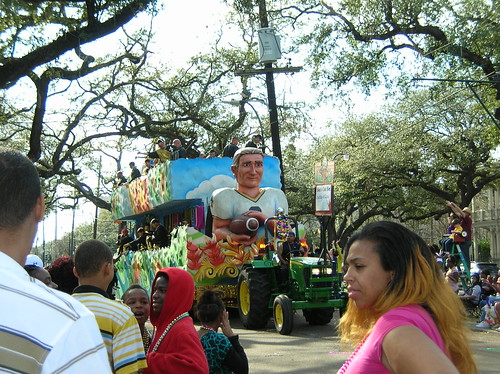
The floats themselves don't represent anything in particular. They're all left over from the Carnival season anyway. Here's a float from Saturday's Irish Channel parade which featured a likeness of Drew Brees.. just because.

Here's the same float several weeks ago during the Krewe of King Arthur Parade.
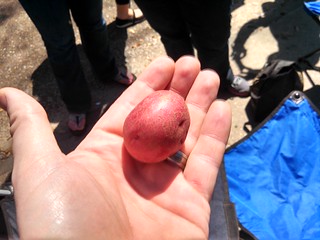
There are also the "Irish stew" throws of produce. Typically carrots, onions, potatoes, and cabbage. For some reason Saturday we were only running across the "fun size" variety of these.


Also, no one has explained to me why the Irish Channel Parade rolls against the normal flow of traffic up St. Charles Avenue but that also lends the event a point of distinction.
But the most interesting difference between the two parade seasons is the St. Patrick's parades allow more blatant electioneering. Voters attending the parade in search of a Juvenile Court candidate to back in the April 6 special election saw a clear contrast between Doug Hammel's conservative yet appropriate to the occasion neckwear

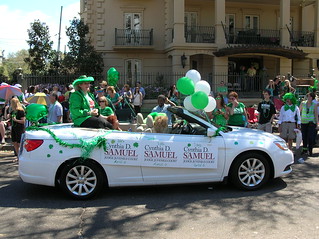
And opponent Cynthia "The Barracuda" Samuel's far more flamboyant jacket and hat.
Also sighted in the parade was District B Councilwoman Latoya Cantrell.

No doubt, Ms. Cantrell was on the lookout for violations of the city's parade ordinances along the way. We look forward to her report on the matter.
Jackie Clarkson, on the other hand, was nowhere to be seen that day. Which is a shame since this food truck looked like it was specifically marketed to her preferences.

The floats themselves don't represent anything in particular. They're all left over from the Carnival season anyway. Here's a float from Saturday's Irish Channel parade which featured a likeness of Drew Brees.. just because.
Here's the same float several weeks ago during the Krewe of King Arthur Parade.
There are also the "Irish stew" throws of produce. Typically carrots, onions, potatoes, and cabbage. For some reason Saturday we were only running across the "fun size" variety of these.
Also, no one has explained to me why the Irish Channel Parade rolls against the normal flow of traffic up St. Charles Avenue but that also lends the event a point of distinction.
But the most interesting difference between the two parade seasons is the St. Patrick's parades allow more blatant electioneering. Voters attending the parade in search of a Juvenile Court candidate to back in the April 6 special election saw a clear contrast between Doug Hammel's conservative yet appropriate to the occasion neckwear
And opponent Cynthia "The Barracuda" Samuel's far more flamboyant jacket and hat.
Also sighted in the parade was District B Councilwoman Latoya Cantrell.
No doubt, Ms. Cantrell was on the lookout for violations of the city's parade ordinances along the way. We look forward to her report on the matter.
Jackie Clarkson, on the other hand, was nowhere to be seen that day. Which is a shame since this food truck looked like it was specifically marketed to her preferences.
Wednesday, March 13, 2013
Shit my Jackie says or Let This Be the Final "Hipster" Post
Apology in advance: I meant to post this yesterday afternoon but it ended up taking longer to write than I anticipated. This is why I jump from Twitter tea leaf reading into a longer bloviation on gentrification. Again, sorry about that. Since I began this post, a Gambit article as well as this NOLA Def follow-up have updated the story.
From the City Council meetingtoday yesterday where they are were discussing the new food truck regulations.
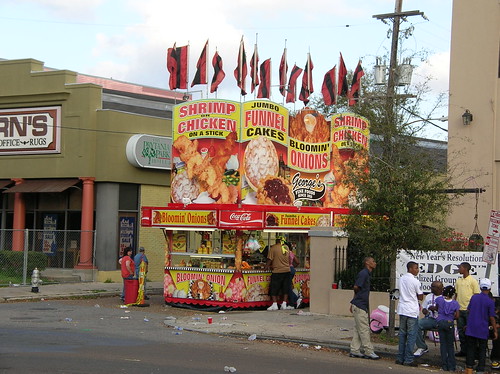
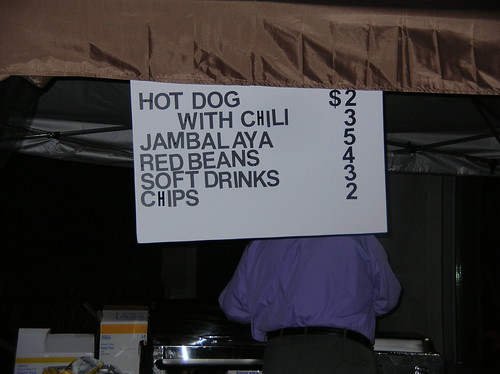
But Jackie's funnel cake and corn dog dispensaries aren't the only food services in operation along parade routes. There are also actual food trucks lurking about. They just aren't the nouveau gourmet kale and quinoa cake pop vendors the council has in mind while considering these regulations. Instead they tend to offer a less sophisticated, but certainly more "traditional New Orleans" brand of street food.
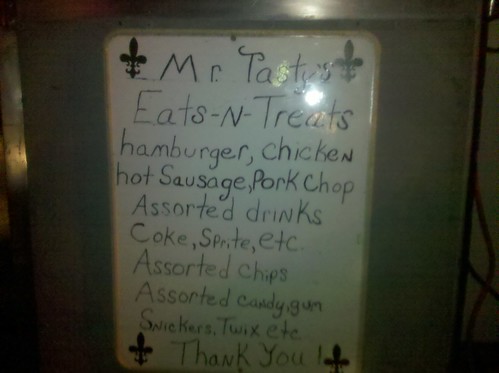
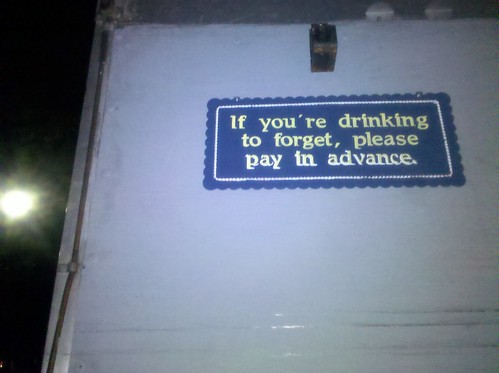
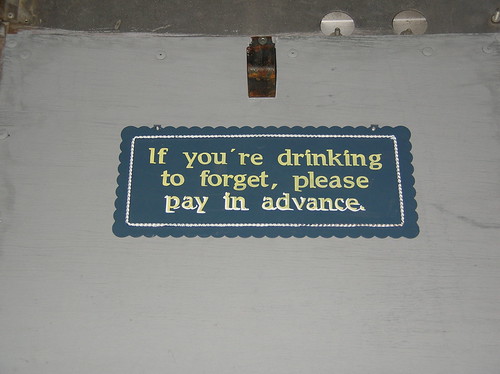
I bought a pork chop sandwich from these people. It was one fried pork chop served on a plain hamburger bun, dressed with nothing. Pretty satisfying if you've been at the parade "drinking to forget" anyway.
If I'm reading Gambit's tweets correctly, Stacy Head seems pretty exasperated with the process right now. But then again, when is she not?
Not that the discussion isn't silly. Council appears to be trying to figure out the appropriate distance food trucks must stay from "brick and mortar" restaurants while also staying within reasonable proximity to those restaurants' restrooms. Last week during BP trial testimony, geologist Andrew Hurst described the importance of finding what he calls the "Golden Zone" with regard to deepwater drilling.
Next they will take up the issue of misleading or unnecessary quotation marks.
Meanwhile the.. um... course to digest this week with regard to all of this has been an article from this month's Antigravity by Jules Bentley. The piece has gotten a lot of attention; some good, some bad. It's valuable, though, because it addresses aspects of the national food truck "movement" that aren't often discussed locally when this issue comes up. It turns out that, in some ways, food trucks have become something of right wing cause.
This is all worth knowing about. But it doesn't necessarily follow that the worst-case scenario Bentley implies, "the deregulated corporate future: hundreds of chain-restaurant junk food trucks peddling toxic, mass-advertised garbage wherever a crowd gathers," is what's on the horizon locally.
It's difficult to picture such vendors having much success at any of our spring festivals where the local food is the major draw. One imagines they might prefer the highly touristed parts of the French Quarter. But before that can happen, they'd have to displace our native "toxic garbage" peddling Lucky Dog monopoly from that territory.
So while it's helpful to know that the fast food industry and its lobbyists are looking to horn in on a popular food trend, we don't need to assume that some of their favored reforms are in every case a bad idea. A better conclusion to draw from this is that it's often important to separate specific policy questions from the idealogues who might happen to argue on the correct side of them for whatever reason. Sometimes Rand Paul gets up and says he doesn't like drones. He might have stupid reasons for doing that but it doesn't make him entirely wrong.
Don't get me wrong, though. I enjoyed reading this article. Jules is a talented writer who, counter to the current effete trend, is unafraid to reach into a deep rich bag of snark and let fly with a torrent of high quality hipster-bashing. For example,
Unfortunately we've reached a point where it also undermines communication due to the reactionary identity politics of the image conscious young urbanite. I think they've developed some sort of anti-defamation society. It's become nearly impossible to criticize any aspect our superficial commercialized fashion-conscious culture without being branded a "xenophobe."
Personally I think the kids doth protest too much, although often times I can't really blame them. During my own run through the 18-35 demo, I read enough inane crap that was supposed to describe my tastes and tendencies that I hope never to put anyone else in a similar box. The caveat, though, is if you're going to complain about being stereotyped in with the contemporary trend, you should be expected to think independently of it. Or at least not buy into the marketing ploys drawn from it.
The phenomenon by which popular means of expression are co-opted by commercial or superficial interests is timeless anyway. Lately, though, we've come to see "branding" and personal expression as essentially the same activity. Hence the almost cultish shushing of anything deemed overly critical or hot tempered. I don't know exactly when it became so incredibly gauche to make any sort of argument that strays too far outside of, "Yay for these guys for doing a thing!" but I find it sort of oppressive... or at least limiting. Like the whole world took a big Xanax.
Bentley sees something like this at work with regard to the food truck movement.
But, okay, in the interest of more effective engagement I'm forswearing future use of the word "hipster." (Except maybe on Twitter where loaded imprecise terms are actually preferred.) It starts too much of a side conversation and distracts from the more important points of one's argument. The worthy takeaways from Bentley are that New Orleans is faced with a very real gentrification problem, and that's a difficult problem to tackle because it comes with a host of attractive incidentals that lend it the guise of progress. But by describing this problem, he opens himself up to too many distracting ad-hominem accusations of "xenophobia" and the like.
A good companion article to this was published a few weeks ago by Richard Campanella.
Campanella does his share of smirking at the dumb trendiness of his Bywater neighborhood. But his focus is describing the material implications of this aesthetic.
Too often our conversations about "what kind of city we'd like to build" ignore the central question whether or not we can afford to live there. The ideal city harbors a wide diversity of opportunities for work, leisure, and entertainment. But, more importantly, it offers an affordable quality of life. If New Orleans were actually "booming" in the way its spokesmodels and political leaders claim, we would be witness to a far more chaotic arrangement of opportunity and development. Instead we're dealing with a predictable pattern of economic stratification tailored to an increasingly exclusive monoculture that is slickly sold as a "renaissance."
Still, I say it's a mistake to blame the "hipsters" and their goofy accoutrements. In truth, food trucks are actually a pretty nice amenity. They may inadvertently signify the presence of a sinister trend but they do not cause it. I suppose one could say the same for much of what gets classified as "hipsterdom" in general. But I'm fine with whatever crap game of dress up the kids want to play so long as my rent doesn't go too damn high in the process.
Better to spend time and energy following the policymakers whose decisions directly affect our quality of life. People like Jackie Clarkson, for example, who helpfully reminded us yesterday which world she comes from.
From the City Council meeting
Clarkson: "My favorite thing at Mardi Gras is trucks with hot dogs and candy apples."
— The_GambitLIVE (@The_GambitLIVE) March 12, 2013
Head: "Those are carnies. They're not from New Orleans" and have nothing to do with this ordinance.
— The_GambitLIVE (@The_GambitLIVE) March 12, 2013
But Jackie's funnel cake and corn dog dispensaries aren't the only food services in operation along parade routes. There are also actual food trucks lurking about. They just aren't the nouveau gourmet kale and quinoa cake pop vendors the council has in mind while considering these regulations. Instead they tend to offer a less sophisticated, but certainly more "traditional New Orleans" brand of street food.
I bought a pork chop sandwich from these people. It was one fried pork chop served on a plain hamburger bun, dressed with nothing. Pretty satisfying if you've been at the parade "drinking to forget" anyway.
If I'm reading Gambit's tweets correctly, Stacy Head seems pretty exasperated with the process right now. But then again, when is she not?
Not that the discussion isn't silly. Council appears to be trying to figure out the appropriate distance food trucks must stay from "brick and mortar" restaurants while also staying within reasonable proximity to those restaurants' restrooms. Last week during BP trial testimony, geologist Andrew Hurst described the importance of finding what he calls the "Golden Zone" with regard to deepwater drilling.
Hurst described what he called the Golden Zone, a layer of rock formations deep beneath the bottom of the Gulf of Mexico containing more than 90 percent of its oil reserves, where temperatures range from 140 degrees to 248 degrees Fahrenheit. But the farther down one drills, into the warmer temperatures, the rock containing oil becomes more fragile, especially in the Mississippi Canyon, he said. The result is that there is a very narrow margin in the area where the Macondo well was drilled between the pressure needed to move drilling mud down the well to keep the drill bit moving through rock and too much pressure that would result in the mud fracturing the surrounding rock and disappearing, allowing oil and gas to move up the well toward the surface, he testified.Fashioning these ordinances seems to require a similar degree of finesse.
Next they will take up the issue of misleading or unnecessary quotation marks.
Meanwhile the.. um... course to digest this week with regard to all of this has been an article from this month's Antigravity by Jules Bentley. The piece has gotten a lot of attention; some good, some bad. It's valuable, though, because it addresses aspects of the national food truck "movement" that aren't often discussed locally when this issue comes up. It turns out that, in some ways, food trucks have become something of right wing cause.
On the subject of justice, let’s get to know perhaps the biggest power behind New Orleans food truck advocacy, and one of the most frequent partners of the New Orleans Food Truck Coalition: the so-called Institute for Justice.Bentley goes on to describe the way fast food companies like Taco Bell, Chick-Fil-A, etc. have, perhaps inevitably, gotten into the truck game and so have become a force behind deregulation movements in some cities.
The Institute for Justice was begun with seed money from the infamous Koch brothers, who continue to fund it, along with the Walton siblings who control Wal-Mart. It’s a coalition of lawyers and PR professionals providing free legal advice and representation for conservative legal causes all over the country, “both in the courts of law and in the court of public opinion.” Once best-known for their attacks on affirmative action (which they call “reverse discrimination”), the Institute has more recently become prominent as high-profile litigators in favor of “school choice,” aka vouchers and charter schools. They’ve got multiple tentacles wrapped around Louisiana: the Institute’s founder became president of the “national school choice leader” Alliance for School Choice, which a few months ago filed suit “to intervene in the recent lawsuits challenging the newly-expanded statewide Louisiana school voucher program.” Yes, how dare anyone challenge Bobby Jindal’s giveaway of taxpayer education funds to fringe religious freaks!
The Institute for Justice is very hot to strike down our laws governing food trucks. To that end, the Institute came to New Orleans in July 2012 to hold “Let the Food Trucks Roll,” a food truck advocacy “symposium and rally” in conjunction with (among others) the New Orleans Food Truck Coalition, Neighborland and the Southern Food and Beverage Museum.
This is all worth knowing about. But it doesn't necessarily follow that the worst-case scenario Bentley implies, "the deregulated corporate future: hundreds of chain-restaurant junk food trucks peddling toxic, mass-advertised garbage wherever a crowd gathers," is what's on the horizon locally.
It's difficult to picture such vendors having much success at any of our spring festivals where the local food is the major draw. One imagines they might prefer the highly touristed parts of the French Quarter. But before that can happen, they'd have to displace our native "toxic garbage" peddling Lucky Dog monopoly from that territory.
So while it's helpful to know that the fast food industry and its lobbyists are looking to horn in on a popular food trend, we don't need to assume that some of their favored reforms are in every case a bad idea. A better conclusion to draw from this is that it's often important to separate specific policy questions from the idealogues who might happen to argue on the correct side of them for whatever reason. Sometimes Rand Paul gets up and says he doesn't like drones. He might have stupid reasons for doing that but it doesn't make him entirely wrong.
Don't get me wrong, though. I enjoyed reading this article. Jules is a talented writer who, counter to the current effete trend, is unafraid to reach into a deep rich bag of snark and let fly with a torrent of high quality hipster-bashing. For example,
“Real” food trucks—the kind of food trucks that the NOFTC cares about and fights for—are like gastronomic EMS for hipster fuckheads: little mobile factories reproducing a genericized leisure-class remix of world cuisine, the kombucha-infused Sriracha empanadas that capitalism has trained moneyed, socially aspirant young Americans to demand.For the record, I'd like to point out that as a mildly pro-food truck person who has sampled several of the more popular outfits around town, I've yet to find one that sells any actual quinoa. But I get it. It's hard to resist throwing it in there when writing these little jokes. I did it myself nearer the top of this post. I'm not sorry. There is a cathartic value in this and I'd like to encourage more of it.
These food trucks provide a way for high-tech newcomers to avoid having to deal with or even speak to New Orleanians; they’re another layer of twee West Coast culture superimposed atop what’s left of our city, to make it more comfortable for well-off “young creatives.” Just as lower-middle-class tourist visitors to New Orleans line up around Canal Street for the reassuring familiarity of IHOP or McDonalds, our city’s status-conscious upper-class arrivistes can now line up for reassuringly artisanal quinoa claptrap served by reassuringly privileged people with reassuringly kewl tattoos.
Unfortunately we've reached a point where it also undermines communication due to the reactionary identity politics of the image conscious young urbanite. I think they've developed some sort of anti-defamation society. It's become nearly impossible to criticize any aspect our superficial commercialized fashion-conscious culture without being branded a "xenophobe."
Personally I think the kids doth protest too much, although often times I can't really blame them. During my own run through the 18-35 demo, I read enough inane crap that was supposed to describe my tastes and tendencies that I hope never to put anyone else in a similar box. The caveat, though, is if you're going to complain about being stereotyped in with the contemporary trend, you should be expected to think independently of it. Or at least not buy into the marketing ploys drawn from it.
The phenomenon by which popular means of expression are co-opted by commercial or superficial interests is timeless anyway. Lately, though, we've come to see "branding" and personal expression as essentially the same activity. Hence the almost cultish shushing of anything deemed overly critical or hot tempered. I don't know exactly when it became so incredibly gauche to make any sort of argument that strays too far outside of, "Yay for these guys for doing a thing!" but I find it sort of oppressive... or at least limiting. Like the whole world took a big Xanax.
Bentley sees something like this at work with regard to the food truck movement.
Beyond using the trappings and signifiers of subculture—e.g. graffiti as décor—hipster capitalism also brands itself as underdog or revolutionary, employing the language and techniques of social justice movements. New Orleans food truck advocates, like any hipster-capitalist undertaking, aggressively seek to enlist you in their urgent, righteous struggle. Arise, ye Facebookers, and sign this internet petition! For freedom! For liberty! For justice! For food trucks!He's not wrong to point out the folly of fashionable faux-activism. But I think it's okay to do this without forcing ourselves to the conclusion that the thing the douchey kids are all Facebooking the power about isn't also a nice thing to have.
But, okay, in the interest of more effective engagement I'm forswearing future use of the word "hipster." (Except maybe on Twitter where loaded imprecise terms are actually preferred.) It starts too much of a side conversation and distracts from the more important points of one's argument. The worthy takeaways from Bentley are that New Orleans is faced with a very real gentrification problem, and that's a difficult problem to tackle because it comes with a host of attractive incidentals that lend it the guise of progress. But by describing this problem, he opens himself up to too many distracting ad-hominem accusations of "xenophobia" and the like.
A good companion article to this was published a few weeks ago by Richard Campanella.
Campanella does his share of smirking at the dumb trendiness of his Bywater neighborhood. But his focus is describing the material implications of this aesthetic.
After the area attains full-blown “revived” status, the final cohort arrives: bona fide gentry, including lawyers, doctors, moneyed retirees, and alpha-professionals from places like Manhattan or San Francisco. Real estate agents and developers are involved at every phase transition, sometimes leading, sometimes following, always profiting.
Native tenants fare the worst in the process, often finding themselves unable to afford the rising rent and facing eviction. Those who own, however, might experience a windfall, their abodes now worth ten to fifty times more than their grandparents paid.
Too often our conversations about "what kind of city we'd like to build" ignore the central question whether or not we can afford to live there. The ideal city harbors a wide diversity of opportunities for work, leisure, and entertainment. But, more importantly, it offers an affordable quality of life. If New Orleans were actually "booming" in the way its spokesmodels and political leaders claim, we would be witness to a far more chaotic arrangement of opportunity and development. Instead we're dealing with a predictable pattern of economic stratification tailored to an increasingly exclusive monoculture that is slickly sold as a "renaissance."
Still, I say it's a mistake to blame the "hipsters" and their goofy accoutrements. In truth, food trucks are actually a pretty nice amenity. They may inadvertently signify the presence of a sinister trend but they do not cause it. I suppose one could say the same for much of what gets classified as "hipsterdom" in general. But I'm fine with whatever crap game of dress up the kids want to play so long as my rent doesn't go too damn high in the process.
Better to spend time and energy following the policymakers whose decisions directly affect our quality of life. People like Jackie Clarkson, for example, who helpfully reminded us yesterday which world she comes from.
Before Clarkson left the meeting, she pounced on Billow as discussion went to the 100 feet proximity requirement that would prohibit trucks from serving within 100 feet of a restaurant:If looser restrictions on food trucks make the people in Jackie Clarkson's world uncomfortable, they can't be all that bad, right?
"It's likely unconstitutional to have a proximity requirement," Billow said.
"You have to prove that to me," Clarkson replied. "You're talking about land owners, private property rights, you're talking about tax payers on property. I come from that world. That would have to be proven in court for me. You don't want to go there with me on that. Don't argue that with me."
Tuesday, February 05, 2013
Just one block
Sounds like a pretty sweet deal to me. Line 'em up all over Carondelet and Prytania Streets.
The just-opened Hotel Indigo is selling a few basic items from a kiosk in front of the building.
Usually, The Grocery at Sixth and St. Charles sells sandwiches out the window. (This photo is from 2007. I haven't yet seen what they've got there this year.)
Aside from that, though, if you're in that area you're pretty much going to have to walk several blocks for a corn dog.

Monument to what was once food on sticks
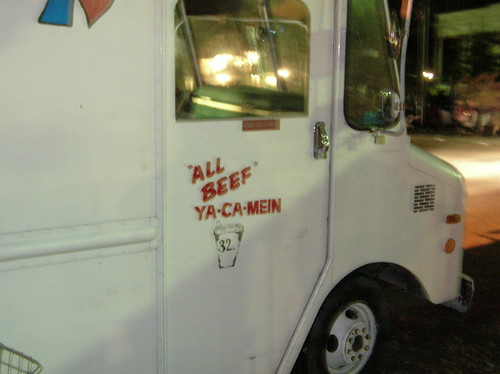
So an enterprising food truck operator with a strong enough social media presence to announce his or her presence could do well to set up a block off the route here. Or, the more adventurous among them might even manage to sneak in a bit closer. A van marked "Mr. Tasty's" set up at Third street one night a few years ago. Nobody complained.. although most paid in advance.
During the parades, more trucks will be parking near friendly bars or in other pre-arranged spots. Without a lottery-awarded spot, vendors must stay at least one block off parade routes, and websites and Twitter feeds are the best ways to track them down.Usually the first weekend is a bit more sparse for parade food, but, if last week was any indication, there is plenty of room for more vending options one block off the route if you concentrate on the stretch between Jackson and Louisiana, for example.
The just-opened Hotel Indigo is selling a few basic items from a kiosk in front of the building.
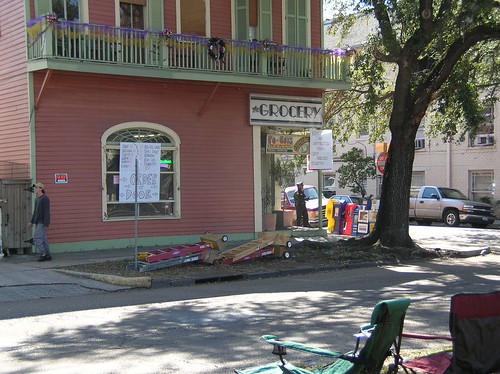
Usually, The Grocery at Sixth and St. Charles sells sandwiches out the window. (This photo is from 2007. I haven't yet seen what they've got there this year.)
Aside from that, though, if you're in that area you're pretty much going to have to walk several blocks for a corn dog.
Monument to what was once food on sticks
So an enterprising food truck operator with a strong enough social media presence to announce his or her presence could do well to set up a block off the route here. Or, the more adventurous among them might even manage to sneak in a bit closer. A van marked "Mr. Tasty's" set up at Third street one night a few years ago. Nobody complained.. although most paid in advance.
Tuesday, October 09, 2012
Question(s)
What is it about food trucks that distinguishes them as a "new and burgeoning industry" requiring a change to existing mobile vending laws? That's not a rhetorical question. I honestly don't know what's happened that brings forth the claim that regulations are "out of date."
It's fine with me if your answer is as simple as it's a change in popular fashion. Because beside that I don't notice any fundamental advance in technology or business plan. We're still just selling prepared food out of a truck, right?
Not saying there's anything wrong with it but when they start talking about changing laws because of "innovations" that aren't all that obvious, I start to wonder what else might be going on.
Update: Here's part two of this question. Would any proposed change to mobile vendor regulations seem different to you if the beneficiaries would be corporate rather than Mom & Pop operators?
Upperdate: Is Stacy Head this dumb?
First of all, a "food desert" is typically defined as an urban area deficient in access to fresh healthy groceries. There are "food deserts" with plenty of cheap unhealthy fast food around. That is, in fact, part of the problem. In any case the trucks aren't asking to go to these places and serve healthy meals. They're asking to sell luxury food items at local hot spots. Stacy Head either knows this and is grasping for a distracting feel-good selling point, or is even dumber than we thought she was.
It's fine with me if your answer is as simple as it's a change in popular fashion. Because beside that I don't notice any fundamental advance in technology or business plan. We're still just selling prepared food out of a truck, right?
Not saying there's anything wrong with it but when they start talking about changing laws because of "innovations" that aren't all that obvious, I start to wonder what else might be going on.
Update: Here's part two of this question. Would any proposed change to mobile vendor regulations seem different to you if the beneficiaries would be corporate rather than Mom & Pop operators?
Chains like Taco Bell, Applebee's and Sizzler have each rolled out their own food trucks, the report says. Some of them hand out small samples for free, others sell their fare. Like their independent predecessors, many of the corporate food trucks tap Twitter and Facebook to generate buzz for the vehicles and decide where and when to hit the road.And here's part three of this question. What if such regulatory changes paved the way for Sizzler or Taco Bell to become the official city-sanctioned mobile vendor at every Second-Line parade?
Corporate food trucks are still rare. Only 6 percent of quick-service restaurants and 4 percent of fast-casual restaurants operate food trucks, according to a recent National Restaurant Association survey.
But big brands are increasingly finding food trucks to be effective marketing tools and "rolling test kitchens” for experimentation with new items, one Sizzler business development manager told AdWeek.
Upperdate: Is Stacy Head this dumb?
And Head believes the food trucks would be an asset in areas of the city where residents do not have a lot of places to eat, areas she calls "food deserts."
"What a wonderful place for two or three mobile food vendors to go, so that people can come out and walk around their neighborhood and enjoy an evening out. More eyes on the street, more people walking around their neighborhood in the evening leads to a safer place," said Head.
First of all, a "food desert" is typically defined as an urban area deficient in access to fresh healthy groceries. There are "food deserts" with plenty of cheap unhealthy fast food around. That is, in fact, part of the problem. In any case the trucks aren't asking to go to these places and serve healthy meals. They're asking to sell luxury food items at local hot spots. Stacy Head either knows this and is grasping for a distracting feel-good selling point, or is even dumber than we thought she was.
Subscribe to:
Posts (Atom)