-->
Showing posts with label Hollywood South. Show all posts

Tuesday, July 28, 2020

Whiplash

Start here with...
Gov. John Bel Edwards is schedule to give his latest update on the fight against coronavirus in Louisiana on Tuesday afternoon.

The press conference will start at 4 p.m. from Baton Rouge.

News broke Monday that multiple bars across the state were shut down due to repeated violations of coronavirus restrictions.

The White House has recommended that Louisiana roll back indoor dining, by further restricting indoor occupancy percentages.
But then, immediately notice.... 
Film production will resume in New Orleans next week for the first time since the city shut down in March to combat the coronavirus pandemic, City Hall said on Tuesday.

The industry has become a major employer and financial contributor to the city, with around 12,000 mostly local workers producing movies and television shows that add an estimated $1.2 billion to the economy each year, according to an economic impact study by the state.

"With each film crew consisting of 85% local workers, the return of productions means getting our residents back to work in an industry that will ensure that they are safe,” said Carroll Morton, the director of Film New Orleans, the municipal government office that oversees the industry.
Most of these decisions are about public safety.... but then some of them seem to be driven by some overriding factor. I wonder what that is.... 

Wednesday, October 10, 2018

Damn lies, statistics, and official statistics

What we're trying to do here is make sure the damn lies everyone uses are the official damn lies.
Louisiana spent more than $1 billion on tax breaks for people and corporations during the budget cycle that ended in July.

An annual audit of the state's tax revenue loss, released this week, also found that the return on investment for the 78 rebates and other perks evaluated isn't always known.

"There are no specifications in the statutes regarding the method of calculation to be used in determining the (return) related to each incentive," the Louisiana Legislative Auditor's Office wrote in an executive summary of their findings. "With no guidelines or restrictions, the accuracy of the (return on investment) calculation and the appropriateness of the methodology used cannot readily be determined."
The way to know the difference is the official damn lies are the ones that tell us giving away billions of dollars to corporate parasites "job creators" doesn't actually cost anything.  We're still working on that but stay tuned. 
One of the largest in the budget cycle covered was about $205 million in revenue lost to the Motion Picture Investor Tax Credit. That program, which subsidizes movie-makers who film in Louisiana, is estimated as having a return of 22 cents for every dollar spent.

Officials have recently touted changes made to the film tax credit program in 2016 as offering more stability that has stimulated the film industry here, after a brief decline. Gov. John Bel Edwards' administration plans to release an "economic impact" report in the spring.

Wednesday, October 03, 2018

Hollywood magic

Hey look they figured out how to make 25 cents into five dollars. Wonder how they did that. Must be movie magic.
Critics of the state's film incentive program have long questioned the value to the state. Economic studies, commissioned by the state every two years, have estimated that the program generates 20 to 25 cents in state revenue for every $1 awarded in credits. Film boosters have grumbled that the studies are unfair.

The state expects this spring to release the latest economic-impact analysis of the film program, and they expect this one will be more positive.

This one will show what has changed since the 2017 revamp, said Revenue Secretary Kimberly Robinson, who accompanied Edwards on this week's trip. She expects it will show that each $1 in incentives generates $5 in "economic activity" in the state.
Either that or they carefully shopped around and bought themselves a friendlier economist this time.  But, no, it's probably the magic thing. 

Saturday, October 01, 2016

Diversifying our economy

In Louisiana we're expanding from obscene public subsidies for oil exploration into obscene public subsidies for movies about oil exploration
The movie “Deepwater Horizon,” which opens today in theaters across America, is a rare example of a locally shot film that actually tells a story set in Louisiana.

It's gotten kudos for its meticulous rendering of the events leading up to the 2010 explosion that took the lives of 11 men on a BP oil rig 50 miles off the coast, setting off the worst environmental disaster in U.S. history.

But it is also the most expensive film ever made in the state, at least from taxpayers’ perspective. Under the state’s generous film-subsidy program, Louisiana issued tax credits totaling almost $38 million to Lionsgate, the producer.

That sum eclipses what was given to the previous record-holder, “Green Lantern.” In 2011, the year of that film’s release, the box-office flop got slightly more state aid than the University of New Orleans did.


First we pay for them to make the disasters happen. Then we pay for them to profit by exploiting the fact of the disaster. I'd say, at least the latter half is ostensibly "greener," but since we still subsidize oil production too, it's more like they're getting us coming and going.

Update: Clay saw the movie and reviewed it for us

Sunday, July 10, 2016

Movie pitch

Prologue: You think you know a story...
For eight years, Kenneth Landrieu wore the six-pointed brass star of the Orleans Parish Sheriff’s Office and carried a laminated “reserve” deputy card signed by Sheriff Marlin Gusman.

Whether the honorary designation gave Landrieu the power to chase down a driver, whip out a gun and threaten a man with arrest will be for an Orleans Parish jury to decide in a trial slated to start Tuesday before Criminal District Court Judge Laurie White.

Landrieu’s attorney claims his client was well within the law when he pursued the driver and announced he was a law enforcement officer following a near-collision on Magazine Street last September.

According to police, Landrieu pulled in front of the other vehicle in the Lower Garden District, hopped out of his baby blue 2004 Cadillac DeVille and pointed his gun at the driver, cursing and threatening to arrest him.
Okay so here's the scene. Times are tough in the city of New Orleans. The camera pans over monuments cracked and crumbling under the shame of their own hypocrisy. Smoke from a nearby marsh fire wafts into view. A sinkhole of dread lurks beneath every street. Resilience is running thin.   

In a desperate attempt to restore hope... not to mention his own relevance.. Ceremonial Sheriff Marlin Gusman laminates some badges in order to commission a elite force of freedom fighters. The fake credentials issued by the fake sheriff combine to equal actual legitimacy due to the power of the double negative.  They are called the Faux-Po Five.
Recent Orleans Parish Sheriff’s Office records list Landrieu among 49 people granted “honorary special reserves” status by Gusman, though it’s unclear just what, if any, special powers it confers.

Among others on the list are former New Orleans City Councilman Jay Batt, singer Irma Thomas, jazz trumpeter Irvin Mayfield and frequent political candidate Gary Landrieu, who is Kenneth Landrieu’s brother.
Irma, Batt, Mayfield and the lesser Landrieus set about the work bringing scofflaws throughout the city to justice. Sewerage and Water Board Director Cedric Grant builds and furnishes a secret headquarters for them atop the Broad Street Whole Foods where they use his magic white board to spot petty municipal violations wherever they may occur. (Jeff Landry shows up to help drive them around sometimes too.)

Dramatic scenes from the trailer show Ken brandishing his pistol at a motorist with an expired break tag. Drums sound in the background as Gary files to run for five different municipal offices simultaneously. Irvin bludgeons noise violators in the street with his golden trumpet. Jay drinks lots of martinis and tells people to start calling him "Battman."

Not sure how we're going to afford the effects in the scene where they all have to cross streams and fight the 200 foot tall Savory Simon, though.  That Hollywood South money ain't what it used to be.

Tuesday, July 05, 2016

Next year's project

How do we disentangle ourselves from Hollywood South?
Gov. John Bel Edwards on Tuesday (July 5) announced the state will begin the process of reviewing the state's generous film tax credit program, which legislators moved to limit amid last year's $1.4 billion budget deficit.

Edwards said his administration is conducting the review through the Louisiana Economic Development agency, which "will include an independent examination of the program's economic impact in Louisiana." The governor is also pledging to take comments from the film industry on the value of the program.
This will be pulled in two different directions for several months before next year's legislature gets a hold of any action plan.  On one hand, it fits with the governor's stated objective of stripping special privileges and regressivity out of the tax code in an effort to put the state back on sound fiscal footing.  On the other hand, well, there are some special tax privileges here that people will be looking to defend. If this year's session is any indication, I'd wager on the latter pulling more weight by the time we're through. 

Wednesday, June 29, 2016

Guess Kevin Houser wasn't the problem after all

Always fun when the Saints and Hollywood South get together to steal from Louisiana's public funds.
In the latest black eye for Louisiana’s troubled film subsidy program, the state’s inspector general released a report Wednesday that says a production company that made two programs about the New Orleans Saints bilked taxpayers out of at least $420,000 and possibly more than $1 million.

The inspector general’s report says Horizon Entertainment, which produced “The Sean Payton Show” and “Saintsational,” inflated its expenses associated with those programs by as much as $3.4 million. The Saints’ coach made regular appearances on the former, while the latter featured the team’s cheerleaders.

All told, the two programs received $2.6 million in tax credits, according to the report, nearly 40 percent of which might have been issued in excess.
Read the rest of the article because it's even more convoluted than that. The scandal was broken by WVUE-TV which happens to own the TV studio Horizon was renting(?) borrowing(?) to produce the shows. WVUE also happens to be owned by Tom Benson.  So the conflicted interests are more confused than the Saints' secondary last year.

Here's what's interesting.
One of the more troubling findings of the report was that Horizon “repeatedly engaged in circular transactions,” cutting checks from subsidiary companies and then returning the money to create the appearance that more money was being spent on the film projects.
One could also classify the TV station's relationship with Horizon as another such circular transaction. Horizon's lawyer says Benson expected a share in the company in lieu of rent on the stuido. The company lists rent as an expense billed back to the state in tax credits.  So really Benson was in on the scheme to rip off the state too.

Or maybe he was dragged into it unwittingly. His mental competence has been a point of controversy, after all. In any case something went wrong somewhere because eventually Benson's TV station went after Horizon. And now the Inspector General is after them too.  No one will go after Benson, though. No one ever does.

Tuesday, April 05, 2016

The Hollywood South Severance Tax

Billy Nungesser is a dope and this clearly won't work. But it's fun to throw ideas like this out there because they are clearly better than what we do now. 
With the state’s substantial film and television production incentives under pressure because of a budget crisis that arrived with falling oil prices, Mr. Nungesser is proposing a novel approach: Louisiana will extend the incentives in return for a promise that taxpayers will share in the profits from any big winners at the box office.

“I can’t think of any good argument against it,” said Mr. Nungesser, who floated his proposition — at this point, just a trial balloon — in a telephone interview this week.
What we do now is just hand the big studios very large sums of Louisiana tax revenue and close hospitals and universities to pay for it.  There's got to be a better idea. This probably isn't it but there has to be one. 

Monday, March 21, 2016

Caesar renders unto Jesus.. or at least unto his agent

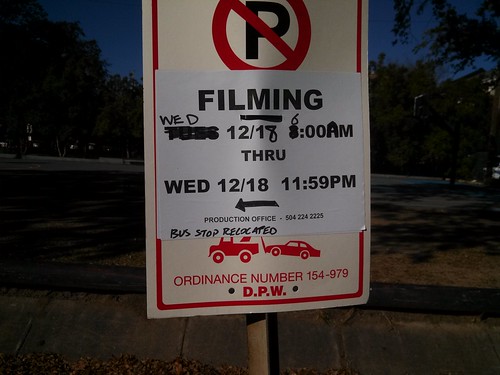
Bus Stop Relocated

For those of you blessed to have missed Tyler Perry's nationally televised Passion play through the streets of downtown New Orleans last night, Gambit is happy to provide an eyewitness account.  I think this paragraph captures it.
Trisha Yearwood nailed her closing number, a moving cover of Lifehouse's "Hangin' on Another Day," and the audience rejoiced (politely) as Yolanda Adams and the Preservation Hall Jazz Band struck up "When the Saints Go Marchin' In," but in the end this was a made-for-television event, designed to sell advertising slots to Walmart and God's Not Dead 2. The rough edges were sanded clean the moment the procession dissipated into the night somewhere along Decatur, as tourists returned to their hotels and residents to their homes.
For a few hours, a production team superimposed its own alternate reality on our familiar public space before disappearing into the quiet again.  It's very much like a Carnival parade, really. Which is one reason the #KreweOfJesus tag was pretty clever last night. Little disruptions like this are different from a parade in one key regard, though. They aren't staged for the benefit of the public whose facilities they commandeer.

We're pretty well used to such scenes at this point. Several times per year now some film production, or megacorporate sporting event or some such takes over a block or two of the available parking, or restricts access to streets and parks and sidewalks. Sometimes it goes on for weeks at a time. And it's  not only happening downtown but probably in your neighborhood too.
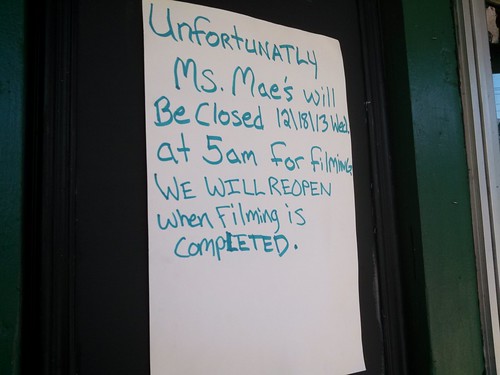

Unfortunatly

It would be at least some small comfort to know that these entities were paying us back for the privilege. But, no, of course it doesn't work that way. We pay them. We pay them very well, in fact. Here's The Advocate's special report from 2014 on the film tax credit.
Last year, 107 such projects qualified for help from Louisiana taxpayers, at an upfront cost to the state budget of about $250 million. Stephen Moret, Jindal’s secretary of Economic Development, says he thinks that figure could double within a few years.

The program, the richest of its kind in the country, covers between 30 and 35 percent of in-state production costs, including eight-figure actor salaries, as long as a film’s local costs top $300,000. The subsidy is so large that it completely changes the economics of filmmaking. And its size has probably contributed to the program’s history of corruption as well, tempting some dishonest film producers into padding their expenses so they can recoup more money.
At last glance the state is facing a budget shortfall for next year of something like $750 million.  When the next special session convenes, it might be a good idea to take another look at massive giveaways like the Hollywood South program. It won't be easy.  Even the modest limits imposed on the boondoggle last year faced strenuous opposition from industry lobbyists and the legislators they own. We'd like to hope that the dire fiscal situation would scare some sense into some folks, but there's little evidence so far that this is happening.

In the meantime, our streets, parks, and tax dollars are purposed toward the production of religious-commercial products like Tyler Perry's Parade of Jesus Featuring Creed. According to its tax credit application, The Passion's estimated budget is around $11 million. We're still waiting to find out how much of that the state will absorb.

When we find out, though, will someone please alert John Kennedy? He needs something worthwhile to complain about.

Update: Apparently there's been some discussion in Baton Rouge on this very topic today.
Morrell said votes to remove exemptions and end tax credits could occur in a special session later this year if the governor issues a call or during the regular session in 2017. Legislators can't deal with tax issues in even-numbered years during a regular session.

Legislators have for years put in place various tax credits and exemptions from the sales tax to create incentives for people doing business in the state or to provide favored groups a shelter from the state's sales tax, which on average, is among the highest in the country.

But critics have long complained that it's not clear whether the tax credits provided to business are worth what they cost the state. And some of the tax credits are regarded as more corporate welfare than economic development efforts.
Nothing until the special session at the earliest. And even then, probably nothing. 
It's not likely to get any easier for Legislators. The generous film tax credit program, which has been among the most controversial incentive programs, is likely to prompt intense pressure from the film industry to keep the tax credit in place.
Get used to paying the extra sales tax.  It's all your legislators have the courage to ask anyone for. 

Upperdate: Answer is about  $3 million.
Exactly how much “The Passion” will receive in credits won’t be determined until late this year, after the company submits its receipts and the state has a chance to audit them.

The audit is a new requirement this year under laws aimed at trimming costs to the state and ensuring productions actually spend the money they claim.

Under the program, productions receive credits worth 30 percent of the amount they spend in Louisiana and 40 percent of the amount they spend on payroll, including what they spend on performers who are in the state only for filming. Companies can sell those credits or claim them at slightly reduced value from the Louisiana Department of Revenue if their tax liabilities are less than the amount of credits they receive.
Somebody really ought to alert the Treasurer to this mess. He seems eager to help. But he could use some help understanding how.

Friday, October 23, 2015

Authoritarian zoo

What is even real anymore?
Fox is looking to put a new spin on the cop drama.

The network has handed out a script commitment to an untitled drama based on the New York Times story "Who Runs the Streets of New Orleans?"

The drama is inspired by the article and explores what happens when an enigmatic tech billionaire makes a deal with a bankrupt, dying city to provide a privately owned and operated police force.
Basically Fox is pretty high on the idea of Sidney Torres as Batman.  It's perilous to try to identify the point in time where we fell of the ledge of reality anymore.

Tomorrow the mayor wants some of you to approve a new tax on French Quarter hotels and retailers which will allow Torres to continue his superhero cosplay operation.  (That article says the sales tax pays for State Troopers. But it's part of a package of dubious special taxes for specific security measures in the Quarter.)  After that some state tax credits will subsidize a TV show about it.

Can't pay for hospitals or universities but this we can make happen.

Saturday, October 03, 2015

Keep kicking the poors

Good job
For decades the Circle Food Store store has been an anchor of the 7th Ward community, especially for those whose use SNAP, the government food assistance program. But soon more than 60,000 people across Louisiana could have to go without.

The Department of Children & Family Services now says able-bodied SNAP recipients between the ages of 18 and 49 with no children, must find a job or be in a job training program or risk being booted from the benefits program.

Jan Moller, of the Louisiana Budget Project, believes the policy change is going to just cause more problems.

"Food is such a basic thing that people need to live, and I think this is going to create a lot of hardships for people who already have it very hard, who are already struggling to get by everyday," said Moller.
A state department decided to tighten up on an already tiny spigot of federal funds in order to.. well.. just to shame the people they've already abused
Benefits paid under the Supplemental Nutrition Assistance Program, or food stamps, are totally federally funded, so no state budget funds are being saved.

Under the change, which went into effect Thursday, able-bodied adults will be required to work no less than 20 hours a week or be enrolled in a federally approved job training program. If the requirement is not met by Jan. 1, the food stamp dollars, which average $194 a month, end. Sonnier said the 20-hour-a-week work requirement can be met by doing approved volunteer work or in a nonpaid job.
"No state budget funds are being saved."  Hey somebody tell that to David Vitter. He seems to think he's going to fix the state budget by eliminating "food stamp fraud."   
Vitter wants a sunset on all tax credits and rebates that exist. This means the Legislature would have to vote to keep such programs in place. In order to save money in the short term, Vitter has said he wants to target food stamp fraud and reduce the number of cars state government uses. He also mentioned getting rid of the solar tax credit. 
By the way, "food stamp fraud" is not a problem that exists in any meaningful way.  But that doesn't stop it from being a perpetual political hobbyhorse for candidates running on a kick-the-poors platform.

Meanwhile, the costly, corruption-ridden "Hollywood South" tax giveaway to film studios will cost the state $180 millon next year. And that's only if the cap the legislature just put on the program actually remains in place. All four of the major candidates running for Governor have declared their intentions to call a special session shortly after taking office.  Gambit's preferred candidate, Lt. Governor Mr. Bean, thinks the cap is too low.

So there's your election. The front-running candidate wants to kick the poor when they're down and the press darling wants to give more tax money away in corporate welfare. Only one candidate is serious about tuition relief and Medicaid expansion but nobody.. not even the "usually liberals"..  take that guy seriously.

Good job all around, everybody. 

Saturday, June 20, 2015

Job-killin'

The screeching over Jindal's decision not to veto a modest cap on film production tax credits is almost as bad as the garment rending over the drilling moratorium a few years ago.  

The cap will last three years. During those three years a LOT of money ($180 million per year) will be spent on giveaways to movie productions. Then it will sunset and even more money will be spent on it.  The movie industry isn't the big loser in that deal. The underfunded universities and hospitals still are.

Thursday, June 11, 2015

Zombie tax credits

They come back to life at "sunset."
Lawmakers are looking to add three-year "sunset" provisions to many of the tax credit reductions and increases the Legislature was expected to implement -- meaning most of the changes would not be permanent. Other across-the-board tax credit reductions, affecting individuals and businesses, would largely expire in three years.

These "sunset" provisions were added in order to bring the budget deal more in line with Jindal's "no tax" pledge. The governor's "no tax" commitment is a lot easier to meet if any changes that require people to pay more in taxes are only temporary.

"It was something the administration wanted," said Rep. Joel Robideaux, R-Lafayette, of the added "sunset" provisions.
Would make a pretty scary Hollywood South movie. They can fund it in three years. 

Tuesday, May 05, 2015

Corporate welfare

Bobby Jindal doesn't like "corporate welfare" anymore.
Are Louisiana's corporations heroic job creators or greedy welfare addicts? It depends on when you ask Gov. Bobby Jindal. Two years ago, Jindal wanted to abolish the state's corporate income tax. "Louisiana's current tax climate results in competitive disadvantages for businesses and individuals by penalizing hard work and increased earnings," Jindal said in March 2013.

The plan - which also included eliminating the personal income tax - was so reckless that the state's top corporate lobby, the Louisiana Association of Business and Industry, opposed it. Jindal surrendered one day into the 2013 session.

Two years later, our governor has had an epiphany. He once said we were crushing businesses with oppressive taxes. This past week, however, Jindal told lawmakers, "The truth is, today, we have a system of corporate welfare in this state."
So, naturally, he's taking steps this year to reign that stuff in. Or not.
Gov. Bobby Jindal, a potential Republican presidential candidate, is trying to close a $1.6 billion budget hole without touching as much as $415,000 per episode in tax breaks that may be due to “Duck Dynasty.”

The A&E television reality show takes part in the nation’s most generous entertainment-tax credit program. Jindal is proposing no changes, arguing that reducing such breaks is tantamount to raising taxes. The state approves enough incentives each year to make up at least $200 million in proposed cuts that led Louisiana State University to say that it may plan for insolvency.

“You’re talking about between $200 million and $250 million a year that goes out the door to TV and film producers to come here and shoot their pictures, in a state where money is scarce,” said Jan Moller, director of the Louisiana Budget Project, which advocates policies that benefit low- and moderate-income people. “It’s irresponsible to let this part of the budget continue running amok at a time when they’re talking about closing college campuses.”
It's a shame Bobby doesn't have the courage of his convictions in this case.  Surely a program like Duck Dynasty would be proud to sink or swim based solely on the principles of the competitive marktetplace.  

Monday, April 27, 2015

And another one gone

The Hollywood South hayride racks up another conviction.
The verdict marked the latest black eye for a generous subsidy program that’s been repeatedly gamed by filmmakers here, and could fuel calls for legislative reform of the Louisiana Motion Picture Incentive Act.

The high-profile defendants, Hollywood producer Peter Hoffman, his wife, Susan Hoffman, and New Orleans attorney Michael Arata, were all found guilty on charges of conspiracy and mail fraud. Arata, the husband of New Orleans Deputy Mayor Emily Arata, was also convicted of seven counts of wire fraud and four counts of making false statements to the FBI.
But, hey, Green Lantern, right?

Sunday, April 19, 2015

Which one will they pick?

Here is a breakdown of the legislature's options for dealing with the wasteful and destructive "Hollywood South" film tax credit program this session.  There are several bills they'll consider this week.  Pay special attention to J.P. Morrell's bill, though. 
Sen. J.P. Morrell, D-New Orleans, has spent considerable time studying the issue after creating the Louisiana Entertainment Industry Development Advisory Commission in 2013 to propose changes.

His Senate Bill 96 offers the most generous cap — $300 million per year. “But I’m not hard and fast on that figure,” he said.

Morrell doesn’t want to go much lower, though. “Capping the program at $200 million per year really sends the wrong message across the nation, especially to states that are competing with us or are looking to expand their programs,” he said.

Morrell has closely consulted with the film and motion picture industry but said he is not their favored legislator.

“When drafting my bills, I did my best to address the obvious issues and flaws in the program while still making it accessible to the film industry and Louisiana citizens to utilize the credit,” he said.

With other bills he has offered, Morrell would limit deductions on some expenses and would make it easier for the government to recover credits given to people caught defrauding the program by requiring all applicants to sign sworn affidavits beforehand. The sworn affidavit is intended to prevent a repeat of a case in which an independent auditor ordered the state in February to issue $6.5 million in credits to a man who had been convicted of swindling the film tax credit program.

The critical detail there among the gobbledy-gook is the $300 million cap.  $300 million is actually a 20 percent increase over the program's maximum annual  cost so far. This means Morrell proposes to use the controversy surrounding the program  as an opportunity to expand it rather than reign it in. I'm guessing this is the bill most likely to pass.

Friday, April 17, 2015

It might be time to pull the film tax credit

Filmed in Orleans Parish Criminal Court:
James Carville shot a pilot for a New Orleans-based "Judge Judy"-style TV court show last year, though "Carville's Court" apparently isn't going forward. The project came to light Thursday (April 16) in an exchange of Sony Pictures Television emails released by Wikileaks, and first reported Friday by Politico.com.

"We did this, and it didn't work out," Carville said Friday. "I liked the people. It would've been fun."
Thank God for Wikileaks. Otherwise how would America know that, yes, there were even worse ideas than The Governor's Wife which could have also been greenlighted.

Anyway, the Louisiana Legislature is considering scaling back its sprawling, corruption-ridden, wasteful Hollywood South tax credit.  And now we know Carville and his friends got their share of the loot while they could. 

Sunday, April 12, 2015

It's Chinatown

Our glimmering Hollywood South racket. It's the same as all the other rackets.
One of the defendants is Peter Hoffman, a colorful Hollywood producer who has beaten a federal rap once before. Another is Michael Arata, an actor and lawyer who is married to Emily Arata, a top deputy to Mayor Mitch Landrieu.

The Aratas are related by marriage to Fred Heebe, the landfill magnate who was the target of a federal investigation when he famously brought down former U.S. Attorney Jim Letten and two of his top lieutenants by bringing to light an online-commenting scandal. Arata is being represented by Billy Gibbens, one of the lawyers who helped Heebe get the federal probe of him dropped.

Saturday, April 11, 2015

Hollywood South Hayride

The latest episode begins next week. Here's some background but see if you can spot the one interesting fact that is missing.
Meanwhile, periodic scandals have marked the program - like the one in which prominent players and coaches for the New Orleans Saints were victimized by a man, sentenced to prison in 2010, who sold tax credits he never actually obtained.

In the trial that opens Monday, the defendants are Peter and Susan Hoffman, identified in court documents as an estranged husband and wife and principals in Seven Arts Entertainment and related companies; and Michael Arata, a New Orleans lawyer also involved in the film business.

The law at the heart of the case allows movie production companies to get a tax credit - at the time of the alleged crime it was up to 40 percent - of certain infrastructure costs, defined as the "purchase, construction and use of facilities that were directly related to and utilized for motion picture production in Louisiana."

If tax credits earned exceed the business's actual tax liability, the credits can be sold to another party that wants to use the credit to pay off its liabilities.

Federal authorities say the Hoffmans and Arata, through companies they owned, purchased a dilapidated mansion just outside the French Quarter in 2007, with plans to turn it into a post-production facility. The alleged crime was using fraudulent documents to obtain tax credits for work that was not actually done on the renovated mansion, credits that Arata purchased at a discount from his partners, then sold at a profit to local businesses and people.
Okay, I'll just tell you.  Arata is married to one of our handsomely compensated Deputy Mayors.  You really aren't anyone in this town until you've made a little something in the movie biz. Which is why, despite all the hand-wringing over the tax credit, you can rest assured the legislature is going to leave the program largely intact.