-->
Showing posts with label tax credits. Show all posts

Sunday, May 30, 2021

Every time you think you've seen the worst Louisiana Legislature of all time...

.... along comes the worst Louisiana Legislature of all time. 

And whooo boy this has been a bad one.

On Monday night this past week, some of us tuned in to observe the latest reverberation of the session's loudest (but also emptiest) controversy thus far. Rep. Valarie Hodges brought a bill before the House that would introduce a specific requirement to the state's high school curriculum. 

Fallout from the Louisiana Legislative Black Caucus’ fight with Rep. Ray Garofalo (R-Chalmette) is to blame for the tense debate on the Louisiana House floor Monday over a bill requiring that high schoolers learn about World War II and the Holocaust, Rep. Tammy Phelps (D-Shreveport) said Monday evening.

Rep. Valarie Hodges (R-Denham Springs) got HB 416 through the House to the dismay of Black lawmakers who couldn’t win support for their attempts to simply have the state Board of Elementary and Secondary Education consider adjustments to the curriculum.

Hodges told the chamber that “the sacrifice our country and our forefathers made in the part of a worldwide attempt at domination of the Third Reich” are worthy of being taught in every high school.

“The Holocaust is a study in how much the future of our nation depends on its citizens to stand up to the forces that divide us and stand up to hate among us,” she said. “Those who do not learn from history are doomed to repeat it.”

It's been a while since the leges have had this much interest in writing curriculum directives directly into state law.  That article references "fallout" over an earlier bill this session introduced by Ray Garofalo that would have barred the teaching of "divisive concepts" such as, for example, the idea that capitalism produces racist or sexist outcomes, or even that racism can be a central theme in the description of US history. 

In other words, it was a pretty bad bill and bringing it to the legislature at all is clearly a deliberate provocation on Garofalo's part.  Interestingly, though, media coverage of the "controversy" has too often elided the nature of the bill as an issue and focused instead on some words spoken by Garofalo while debating it. Take a look at how this Advocate story is framed.

Garofalo first ignited controversy last month when, during a discussion of his bill on how racism is taught in colleges, he referred to how a hypothetical case of a classroom discussion on slavery could include "the good, the bad, the ugly."

He quickly walked back his comment about the "good" in slavery, and allies contend he has been ridiculously portrayed as somehow sympathetic to slavery.

All of a sudden we're no longer talking about the bill he introduced specifically to outlaw academic questioning of white supremacy and are concerned instead with whether or not he's being treated unfairly by critics.  Even now, after his somewhat dramatic removal from his committee chairmanship, Garofalo is presented almost as a sacrificial lamb to petty Democrats. 

At one point Garofalo said, even with his measure, college classrooms were free to air discussions on controversial topics, including “the good, the bad, the ugly” of slavery.

The lawmaker quickly corrected himself on any suggestion of “good” surrounding slavery. But the Louisiana Legislative Black Caucus and Gov. John Bel Edwards said he should be replaced as chairman for multiple reasons.

It's probably true that the Black Caucus did force Garofalo's demotion by threatening to hold up a key tax bill until he was punished. They should have killed the tax swap bill altogether anyway but that's for a different post, probably. Either way, the press coverage over the past few weeks has unhelpfully obscured the reason they acted in the first place.  Actually, instead of "the press" I should just say Tyler Bridges in particular because most examples of this are form his reporting.  In this passage, for example, we see that Clay Schexnayder has pretty good handle on a problem that Tyler is nonetheless intent on turning into something else.

But the alliance between the two ended after Garofalo insisted on presenting House Bill 546, which sought to address concerns of conservatives that left-wing educators are teaching “critical race theory” concepts centered on the notion that racism is systemic.

The night before, Schexnayder advised Garofalo that having his committee hear HB546 would be racially divisive.

Garofalo forged ahead. In explaining his bill, he made an offhand comment about the “good” of slavery but then immediately disavowed it.

The damage was done, however. The exchange went viral, and in the days that followed, the Black Caucus called on Schexnayder to remove him as the Education Committee chairman, while Garofalo said he didn’t think he had done anything wrong.

No doubt people will think I am picking at nits here. But the way that is written, the reader is expected to conclude that a racist bill that says you can't teach about racism might have been a fine thing to pass if not for the "good of slavery" gaffe that went viral. 

Still, it is probably safe to assume that Garofalo is being punished because his fumbling presentation endangered a tax bill and not because Republicans were all that set against his trolling foray into legislative pedagogy. If it were otherwise, there would have been far less enthusiasm for Hodges's bill on Monday. Mark Ballard puts in a pretty good explanation today of how her bill and Garofalo's are really aimed at the same purpose.  

The first thing caucus chair Rep. Jack McFarland, R-Jonesboro, said was that tax policy, not culture wars, is the foremost interest of most House Republicans.

Still, they voted for transgender restrictions and school curricula impositions, such as requiring public schools to teach World War II and the Holocaust in greater detail as well as an emphasis on the nation’s important documents.

Not that such subjects are bad for Louisiana students to learn, but “patriotic education” is a strategy that crowds out conversations about race and its impact on American society. Louisiana educators oppose legislators dictating curriculum.

Another thing we have to point out about these "culture issue" troll bills is that they do not bubble up from the local constituents. They are dropped in from above by well funded national conservative agitators.  For example, Louisiana was one of thirty some odd states to advance bills cribbed from the national right wing grievance-cruelty template that bar transgendered kids from participating in high school sports.  Here is the House breaking out in applause over its passage.


What has made this session more frustrating than most, though, has been the ease at which bills like this have made it all the way through the process. During a session with the more weighty matters of hurricane recovery, coastal restoration, and the distribution of COVID relief funds on the agenda, why are we stopping to argue about any of this foolishness? 

The key observation is that this group of lawmakers doesn't play the game with the same um.. restraint.. that previous bodies might have exercised.  There are a couple of reasons for that.  Recall that 2019 was a wave election for reactionaries and we're seeing what happens when they get to run the whole show with little or no check aside from a Governor who is himself too hands off.  The other problem is this is yet another legislature seeing the effect of a term limits law that has weakened the overall competence of the body as members have less experience and independence and rely more on permanent $$ people to really run things. 

We've seen bills come out of committee this year with obvious problems one might have expected to get "fixed' on the full floor (or killed if they are altogether bad.) But now the customary brakes seem to be off. And, yes, of course the bar  for was very low already but my point is this bunch has managed to go even lower. 

A few examples of that: 

First, a couple weeks ago we saw the final failure to pass even a modest $28 boost to one of the country's cruelest unemployment insurance payments, in part, because House Republicans insisted (falsely) that the current $300 federal enhanced payment that expires this fall is "disincentivizing" work. 

Not willing to let facts flummox a good narrative, a murderers’ row of a half dozen self-described conservatives in the Louisiana House, one after another, pounced on Democratic Harvey Rep. Rodney Lyons’ proposal to increase Louisiana’s miserly unemployment benefit by $28 a week. The increase would move the state from the 49th lowest benefit to 48th by paying no more than $275 per week. Most would get less, and in any case the increase would start in January 2022, four months after the federal enhanced benefits expires.

When Lyons's bill was in committee, it was amended to also include a bizarre provision for one time $1,000 bonus payments to people who take a new job and end their UI benefit.  Accepting the bonus payment would then make the person ineligible for future unemployment benefits for a period after.  That amendment, questionable as it was on legal and moral grounds, was considered a political "poison pill" intended to tank the bill altogether.  However, it's also exactly the sort of thing that a previous House might have removed in time to pass a reasonable bill as clearer thinking heads prevailed.  That wasn't the case this time. 

The House failed again to listen to reason on Thursday when Barry Ivey (R- Central)  practically begged them not advance Rick Edmonds's (R- Baton Rouge)  blatant attempt to hide information about corporate tax breaks granted by the state from public view

House lawmakers on Thursday voted 59-38 for a bill that would change the public records law to allow the state economic development agency to hide certain corporate tax incentive records from the public. 

House Bill 456, sponsored by Rep. Rick Edmonds (R-Baton Rouge), proposes to make an exception to Louisiana’s public records law for certain records under the Louisiana Economic Development (LED) tax incentive programs, including the Industrial Tax Exemption Program, Louisiana Quality Jobs Program and Louisiana Enterprise Zone Program. 

“It is imperative, members, that we do not let this instrument go across to the other side (to the Senate),” Rep. Barry Ivey (R-Central) said during floor debate Thursday. He said HB 456 is one of the most problematic bills he has seen.

What the bill would do is make it impossible for anyone to gauge whether or not recipients of the various "incentive" are actually hitting their targets in terms of workers hired and wages paid instead of  just hoarding all the money in the form of executive compensation, for example. In years past, there would still be a good chance the Senate might "fix" this later on.  But maybe not this year. 

If anything, it looks like they're "fixing" things in the wrong direction. Take for example this teacher pay raise that seemed to shrink overnight without explanation. 

The Senate Finance Committee on Monday approved its version of the state's nearly $37 billion operating budget, including $800 pay raises for teachers and other certificated personnel and $400 pay boosts for support workers, including cafeteria employees and school bus drivers.

The action marked a turnaround from April 28, when Senate Education Committee Chairman Cleo Fields, D-Baton Rouge, said House and Senate leaders were getting behind raises of $1,000 per year, more than double Gov. John Bel Edwards proposal to boost pay by $400 annually.

Nobody says why the money was taken back out.  Louisiana Federation of Teachers' lobbyist Cynthia Posey does point out that the state spends over $9 billion a year on the kind of tax credits and exemptions that Edmonds's bill will shield from scrutiny.

Anyway it's not like there isn't enough money to go around.  This is the first "fiscal session" in quite a while that hasn't played out int he shadow of some massive budget shortfall or impending "fiscal cliff."  Between the federal COVID rescue plan and just better than expected revenues in general, lawmakers have plenty to play with while formulating a budget. 

The Senate Finance Committee on Monday released their mark-up of the state's multibillion-dollar spending plan for the budget year beginning July 1 with spending bumps for higher education, juvenile justice and dozens of other favored pets projects. 

Lawmakers in the upper chamber had the rare opportunity to divvy up hundreds of millions of dollars in better-than-expected tax revenues after the state last week forecasted $355 million in excess funds for the current fiscal year and $320 million in additional collections for the next fiscal year.

Too bad for the teachers, though.  Guess they had to wait in line behind -- this stuff. 

Senators also added dozens of earmarks for favored projects in their districts, including $12 million in road projects in Lafayette, the city where Cortez lives, and $2 million to the athletics foundation in White's hometown of Central. Other dollars would go to recreational facilities in Jefferson Parish, a skate park in Ruston, fire departments in Ascension Parish, the River Road African American Museum and the National World War II Museum

LOL, yes, there again is the big money pit of special tax credits, sweetheart bank deals, and public-private partnering we all know as the National World War II Museum.  According to the budget bill as currently written, they're getting $7.5 million in general funds for something called an "FP&C Management Plus Liberation Pavilion." Here is what will go on there

Following their immersive journey through the war, visitors to The National WWII Museum will enter the Liberation Pavilion. Three building levels will explore the closing months of the war and immediate postwar years, concluding with an explanation of links to our lives today. The first floor, Liberation, will provide visitors with opportunities to contemplate the joys, costs, and meaning of liberation and freedom. The second and third levels will focus on what the war means today, with exhibits developed through the lens of democracy and freedom.

The second floor of the Liberation Pavilion will present richly layered, interactive experiences that explore the postwar years: how the world—and America's place in it—changed after World War II. Dramatic and thought-provoking exhibits will explore selected themes from the postwar era, ranging from the readjustments faced by returning military service members to international tribunals seeking justice for war crimes. We will trace the war's lasting legacies at home and around the world, as America's elevated role as a world power and freedoms secured by Allied forces are continually tested—even to the present day.

One wonders if Valarie Hodges is aware of this appropriation.

See also:  Couldn't really fit it into the narrative here but go ahead and read this Bayou Brief feature on Hodges and the attendant controversies to her bill.  Among other things, it's a good reminder to check your spelling.
Friday, February 10, 2017

We do like to build nice things for rich people

There's always a subsidy for more luxury housing somewhere.
The building will take only part of the parking lot off Loyola Avenue, and developers have plans for a second building -- the sixth for South Market -- on the rest of that lot, she said. Designs for the building are still being finalized, she said.

Domain is seeking a property tax break incentive -- known as a payment in lieu of taxes or PILOT plan -- from the New Orleans Industrial Development Board on Tuesday (Feb. 14).

Monday, February 22, 2016

How did we get here?

The fun is only just beginning in Baton Rouge. We're only a week into the legislative special session and already the Republicans are refusing to play nice
Time is short for coming up with a budget solution for Louisiana. The Legislature has just two weeks left in its special session to resolve the financial crisis. Both Edwards and Senate President John Alario said the House should have already started voting on tax bills, but there are no revenue bills that have broken loose from committee.

All tax and budget measures have to originate in the House, so the absence of votes by House members has stalled work in the Senate.

The governor said he thought at least the sales tax bill -- the most important tax revenue source needed to resolve the current budget crisis -- should have moved by now. Increasing the sales tax by a penny is seen as the most reliable way to raise money swiftly by the time the fiscal year ends on June 30.

"There really isn't any excuse" for not voting on any tax bills a week into the special session, Edwards said.
Remember back when Rep. Neil Abramson (D-New Orleans) decided to help throw the House speakership over to the GOP partisan cabal obstructing things now? Abramson promised us it would be okay because he was in an awesome position to "work closely with the Speaker to manage some of the important legislation for our region and critical policy-making."

So far, so bad with that. Rather than expediting matters, Republican control of the house has significantly gummed up the works as members stake out reality denying positions on both the causes of and solutions to the current quagmire. At least Cameron Henry took the weekend to think about some stuff.
But they haven't recommended a new or different plan. And a few Republicans are already saying they won't accept the tax increases Edwards proposed that would keep even more dramatic set of reductions from happening.

"I want to go on the record saying I won't vote on all the taxes" Rep. Steve Pylant, R-Winnsboro, said during a House Appropriations hearing earlier this week. He was one of three Republicans on the committee to threaten withholding votes on new taxes.

Yet Pylant and the other Republicans haven't brought forward a plan that's different from Edwards -- yet. Rep. Cameron Henry, the House Appropriations Committee chair, said members are working on an alternative set of cuts over the weekend.

The whole committee is working with staff on a master Excel spreadsheet to see what they can come up with to compete with what Edwards has proposed.

"Hopefully, by Monday or Tuesday, we will have an accurate list of everything members want to cut," Henry said.
So sometime today or tomorrow, we'll get to see whatever it is the Microsoft paperclip told them to do. 

But before we get there, and before we hear anything more about John Kennedy's"400 budget cuts" or Beryl Amedee's GoFundMe page, let's make sure we're all clear on just how it is we got here in the first place.  A good place to start with that is this NOLA.com primer by Julia O'Donoghue published last week. 
The origins of Louisiana's budget crisis are complicated and structural. The state simply isn't set up to collect enough revenue to cover its expenses, even during boom times.

But there are also short-term issues that have cropped up over the past few months, as oil prices have plummeted. One of the state's chief economists, Greg Albrecht, said this week that Louisiana has entered into its own economic downturn, even as the rest of the country's outlook is looking up.
So, you see, we're "bucking the trend" economically. And that's a problem but the larger point is that thing about Louisiana's chronic refusal to take proper advantage of its "boom times."  We've talked about this many times before.

It's no secret that the economic and fiscal fortunes of the state are tied to those of the petrochemical industry. It's also no secret that the fortunes of the petrochemical industry are especially prone to a regular boom and bust cycles.  One would hope that, by now, we would have learned to better manage things in a way that helps us take full advantage of the good times investing windfalls in infrastructure, schools, hospitals, and socking some away for when the inevitable bust comes along.

This is not how we do things. 

Instead, we prefer to shovel revenue out the window as quickly (or more quickly, even) than it comes in.  Most of this happens in the form of special tax exemptions and other "incentive" expenditures written into the tax code. According to the legislative auditor, FY 2015 is likely to end up with almost half a billion dollars more in pay outs than revenues.  Not only do we spend more money than we raise, we don't even spend that money on ourselves. We simply give it away.

In 2014, The Advocate published an excellent series on Louisiana's tax incentive programs finding the annual cost had risen over a billion dollars. Just to focus on one example, here's a separate look from this past December at the amount of money the state gave away to oil and gas firms during the height of the recent fracking boom.
Under the credit’s rules, energy producers are refunded the severance taxes on horizontal oil or gas wells for the first two years of production or until the well has paid for itself, whichever comes first. On average, drilling a horizontal well costs about $9 million.

The legislative audit noted that no other state with significant horizontal-drilling operations offered a full refund of so-called severance taxes — though some offer reduced rates.

As the use of the break exploded, so, too, did the state’s cost — from $3 million in 2005 to a high of $272 million in 2012. It cost $166 million in 2014 as drilling slowed, the report said.
Oil and gas exploration already imposes heavy costs on the state in terms of the environmental and health hazards that come with it. As taxpayers we should demand maximum remuneration for enduring this injury.  Instead, under Bobby Jindal's leadership,  we heavily subsidized it.

Why would we do such a thing? Clancy DuBos thinks he can point to at least one reason.
More likely, in my opinion, the real “paperwork” behind Team Jindal’s corporate handouts is the former governor’s campaign finance reports. If history is any guide, there’s likely to be a high correlation between the former governor’s campaign finance reports and a list of companies that received tax incentives. At a minimum, Jindal committed malfeasance by consistently telling lawmakers and the public that his budgets for the past seven years were “balanced.” They were not.
So how did we get here? In short, we've taken what should have been a fiscal windfall generated by hurricane recovery and a booming oil industry and squandered the whole of it on a political kickback scheme meant to elect Bobby Jindal President.  Look how well that's worked out for everyone.

Thursday, February 11, 2016

Fiscal insanity

Bobby Jindal's Louisiana Miracle
Low oil prices are a factor in the budget crisis, but Albrecht and the state's other economist, Manfred Dix, said tax collections across a variety of areas have taken a hit. Sales and income taxes are unusually low.

"This is a very low number for individual income tax collection," Dix said.

Not all of those problems can be attributed to the downturn in the oil market. Louisiana's sluggish sales tax collection predates the low oil prices, Albrecht said.

And perhaps a bigger problem than low prices for Louisiana is the state's lack of corporate tax collections. Albrecht says Louisiana is likely to pay more out to corporations in tax credits and refunds than it collects in taxes this year.

"I've never seen corporate numbers this weak," he told the panel.

Saturday, December 12, 2015

Boom times is over

Given that the mayor says New Orleans has secured "the last piece of the puzzle" for its post-Katrina rebuilding stimulus and that the oil boom that has buoyed the state economy for much of the past decade is at an end, it's fair to conclude the happy economic times might be over for a while.
New figures show Louisiana's economy grew at a 2.4 percent annual rate from April through June, slower than the U.S. economy. Louisiana's performance was an improvement from 2015's first quarter, when the economy shrank 1.5 percent, and from 2014, when economic output grew by 1.5 percent.

The data come from gross domestic product numbers released Thursday (Dec. 10) by the federal Bureau of Economic Analysis. They try to measure all of the economic output of each state. The 2014 figures have been lowered, originally showing Louisiana grew 1.9 percent
The state has spent the happy times slashing public services and handing gobs of money over to big chemical polluters, movie studios, etc. in the form of tax credits and other special considerations.  In New Orleans we've demolished public housing and built lots of nice things for rich people and tourists.

Wonder what we'll do during the bad times. 

Thursday, May 14, 2015

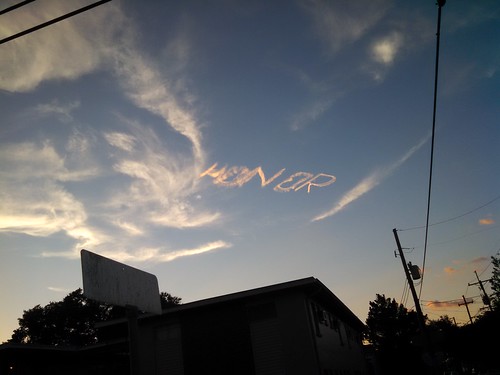
That's OK we've got airplanes

Honor

Today Lamar wrote about a bill before the Legislature that would allow the cash strapped state to subsidize "religious theme parks" like this one here. 
If signed into law, HB 771, a bill authored and proposed by Louisiana’s newest and most controversial state legislator, could provide tens of millions of dollars in taxpayer incentives to subsidize the construction of large-scale theme parks by tax-exempt churches and religious organizations.  It’s an outrageous proposal, and what’s even more outrageous, the legislator behind the effort is suing the State of Kentucky for millions of dollars after it pulled the plug on new earth creationist Ken Ham’s ostentatious and delusional Noah’s Ark theme park.
You might remember that a "Noah's Ark theme park" was among the proposed uses for the defunct Jazzland/Six Flags site in New Orleans last year.
The proposed name for the project is Transformation Village.

In addition to re-establishing the Theme Park  at the existing site, they are proposing the addition of a Water Park to be called Atlantis, a Movie Back Lot, a Jazzland Resort Hotel,  a Hospitality School, a Resource Center, a lifesize reproduction of Noah’s Ark and a International Shopping Center.

A release says “the project is a multi-year Vision with a Team of professionals including  Eric McQuiston, of Eric R. McQuiston, LLC, Craig Dennis and Frank Scurlock, of Scurlock Development Group, LLC.”

Scurlock is the founder and owner of Space Walk and Inflatable Zoo and been involved in Themed entertainment for more than 40 years with extensive World travels.
That proposal, along with one other, was rejected by a review panel who found it was not financially viable. Actually, they used stronger language than that
A member of the committee charged with reviewing the responses called the two proposals an “insult to the people of New Orleans” because they lack specific details about financing, developer qualifications and other matters.

“This is too big of a project, too massive of a development project not to have meat on the bones,” panel member Jeff Hebert said. The proposals offer “nothing of what we need to be able to review to have intelligent conversation,” he said.

Though no one else on the five-member panel was quite so outspoken, they seemed to share Hebert’s sentiments.

“I’m not looking for a pipe dream,” committee member Justin Augustine said. “I’m looking for viable projects that can go to this community.”
Scurlock seems to have taken it in stride, though.  He showed up again recently during Jazzfest when he paid a skywriter to grace the city with a week of positive, vaguely religious messages and smiley faces. 
Words like hope, faith, and coexist have been inspiring city dwellers and popping up all over social media.

The messages of love were the idea of local businessman Frank Scurlock. He hired Hammond to write the sky messages after being moved by all of the recent violence in the city and across the country.

Apparently that wasn't all he was moved by, though. He also used the publicity to launch a Gofundme site for his Noigiler (religion spelled backward) foundation.  Look what that's about.
This mission is fairly costly as it's not local. It cost approx $24000 for the period rain or shine.  The goal is to purchase the "Sky Magic" plane and keep it at Lakefront airport. If purchased the cost will drop considerably and be easy to maintain. At that point it's just smoke oil and gas,etc. We have had offers of free pilots and hangers which is a great start and blessing. We are based out of Flightline First FBO who has donated services.

This is the beginning leading up Transformation Village which is the rebirth of New Orleans East reserecting Jazzland and the addition of a water park and resort hotels to continue to make New Orleans a world class destination.
While the skywriting was going on a few weeks ago, some of us did ask what the angle was supposed to be.

And some others of us got all bent out of shape about the cynicism or whatever.
 Welp.

Anyway, so now I have to wonder if Scurlock has any relationship with this Ken Ham guy.  How big can the Ark-themed religious amusements community really be?

Sunday, March 22, 2015

Every crisis is an opportunity

The Louisiana budget crisis is an opportunity to shift a business tax burden onto individuals.
A brewing legislative push to reduce or eliminate parish inventory taxes could trigger automatic property tax increases — without additional voter approval — by local governments that carry long-term debt, some parish assessors and state officials say.

Whitney Joseph Jr., assessor of St. John the Baptist Parish, estimates that St. John’s School Board and parish government would have to raise the tax rate by a combined 16.6 mills to keep meeting their debt payments for what are known as general obligation bonds. That would bring the total millage rate to about 134 mills and raise a typical homeowner’s tax bill by about 14 percent.

“You’ve got to be able to pay your debts,” Joseph said. “So whatever my bond millage needs to be to pay that debt, that’s what you have to raise it to.”
Remember Jindal's idea ostensibly was to cut out the tax credit by which the state reimburses businesses who pay local inventory taxes. Predictably, business owners large and small across the state howled that Jindal had raised taxes on them thus violating his sacred pledge to Governor Grover Norquist never to do that.  It was "a tax increase we simply cannot afford"
LABI president Stephen Waguespack wasted no time calling the inventory tax credit change a tax hike. He said repealing the credit and leaving the inventory tax in place would "throw sand in the gears of our growing economy ... and lower the number of jobs in Louisiana." He added, "Repealing the inventory tax credit is bad policy and a tax increase we simply cannot afford."
So, nevermind that. Now we're on to repealing the inventory tax altogether. Which, in turn, leaves local governments to find other ways to make up the revenue.
Officials in parishes that rely most heavily on inventory taxes, such as St. John, St. James and others, are raising concerns that in addition to making draconian cuts to services, they would ultimately have to pass on tax increases to homeowners and small businesses to recoup some of the revenue lost for the benefit of the biggest industries and the state budget.

“We are going to shift the tax burden,” St. Charles Parish Assessor Tab Troxler said.
Guess someone will have to afford it. 

Thursday, March 19, 2015

Hollywood South of the Border

It's a globalized grift.
Mexican officials reportedly offered up to $20m in tax incentives to Sony Pictures and MGM in return for changes to be made to the next James Bond film, in an apparent attempt to combat the country’s negative image.

According to a report on the US website Tax Analysts, Mexico offered incentives in exchange for changes to to the script of Spectre, including a request for a Mexican Bond girl and a non-Mexican villain.

Shooting for the latest instalment of the Bond franchise, to be directed by Sam Mendes, is due to begin next week.

The report, based on internal Sony emails that were posted online by hackers purportedly linked to North Korea, said that studio executives from Sony Pictures Entertainment and MGM pressured for changes to the script to secure the incentives.
We would like you to help us improve our image. Please accept this bribe. 

Tuesday, March 17, 2015

The Hollywood South Hayride

How many is this now?  I've lost count.
A Baton Rouge film producer has been charged with defrauding the state’s tax incentive program of more than $160,000, according to the U.S. Attorney’s office.

George Kostuch, 43, who owned and ran K 2 Pictures, is accused of writing checks for more than $500,000 in false expenses, which led to reimbursements from the state for $161,850 during a period of several months between 2010 and 2011, U.S. Attorney Walt Green said in a press release.
 More background here

Tuesday, February 10, 2015

Jindaled

WVUE looks into Jindal's "Louisiana Miracle" a bit.  Or at least they look at the part where we subsidize companies out of the state treasury so that they can lay people off.
We found more. On May 4, 2012, the state announced International Paper would invest $44 million in their Bogalusa mill to retain 411 jobs. The state offered International Paper a $2.2 million tax credit and industrial tax exemptions. Remember, the state announced that deal on May 4.

Two weeks later, on May 18, International Paper told the state it would lay off 64 workers at another plant in Louisiana.

“That's a terrible juxtaposition of events,” LeRoy says. “It suggests that they were holding back, perhaps, on the layoffs until after they got the award.”

International Paper sent this brief statement in response to our inquiries:

We received the state incentive only after committing to invest $30 million dollars in capital improvements at our Bogalusa mill. We appreciate the cooperation from the state and are proud to employ 2000 workers across Louisiana.

In 2008, the Commerce and Industry Board approved a tax break of $1,985,260 for Libbey Glass in Shreveport. State records show the company promised to create 46 new jobs. But they actually reduced their workforce by 147. Nonetheless, the board approved their tax break renewal and let Libbey continue to receive its incentive.

“I think, in this time and day when unemployment has been so high for so long, we shouldn't be paying companies to lay people off,” LeRoy says. “We call this ‘payoffs for layoffs.'”
Meanwhile... 
Widespread layoffs, hundreds of classes eliminated, academic programs jettisoned and a flagship university that can’t compete with its peers around the nation — those are among the grim scenarios LSU leaders outlined in internal documents as the threat of budget cuts looms.

Gov. Bobby Jindal’s administration is considering deep budget slashing to higher education for the fiscal year that begins July 1 to help close a $1.6 billion shortfall.

LSU campuses from Shreveport to New Orleans were asked to explain how a reduction between 35 percent and 40 percent in state financing — about $141.5 million to the university system — would affect their operations. The documents, compiled for LSU system President F. King Alexander, were obtained through a public records request.

The potential implications of such hefty cuts were summed up in stark terms: 1,433 faculty and staff jobs eliminated; 1,572 courses cut; 28 academic programs shut down across campuses; and six institutions declaring some form of financial emergency.

At the system’s flagship university in Baton Rouge, the documents say 27 percent of faculty positions would have to be cut, along with 1,400 classes, jeopardizing the accreditation of the engineering and business colleges. Some campus buildings would be closed.
We need to layoff  everyone in the university system so that we can pay for all these tax incentives that go toward laying people off elsewhere.  In it's own way, it has a certain elegance.

Tuesday, December 16, 2014

Auto-pilot

Louisiana is run by people who call themselves "fiscal conservatives."  You might think that means they favor responsible budgeting policy but what it really means is being super shitty to poor people who need things like food stamps and unemployment benefits while, literally, giving away free money to rich people without a care in the world as to what happens to it.
State officials need to consider Louisiana’s long list of tax breaks as spending programs that siphon dollars away from the budget, just like road projects and health care services, the Legislature’s chief economist said Monday.

But Greg Albrecht said the difference with Louisiana’s $7 billion in various tax credits, rebates and exemptions is that the spending comes off the top, with no annual oversight from state lawmakers before the money goes out the door.

“It’s open-ended and unappropriated. It’s on auto-pilot. The programs, the parameters, the statutes that set them up, participation, payout. It’s got no controls, no review, nothing,” Albrecht told the Press Club of Baton Rouge.